

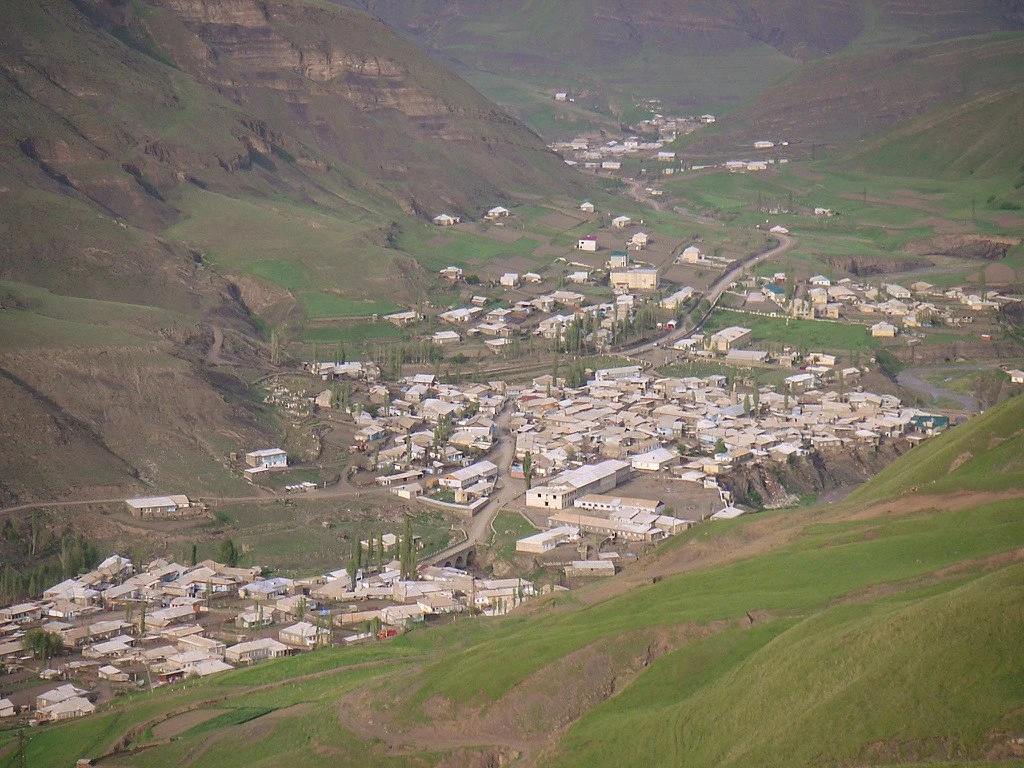
The village of Tpig on the slopes of a mountain valley: a documentary photograph by AGUL-DAG
← All peoples

North Caucasus · Dagestan

Aguls

Aghular

Aguls: the history of the communities of Southern Dagestan, language, culture and settlement. Former beliefs and the spread of Islam according to ethnography and the inscriptions of Rich, a detailed chronology and scholarly materials.
Regions:Dagestan
Tpig · AGUL-DAG · CC BY-SA 3.0

Language

Agul

Family

Nakh-Daghestanian family · Lezgic group

Population

34,576 in Russia (2021 census)

History

A people of southern Daghestan. The Aghuls are an indigenous people of mountainous Daghestan. Their historical villages are located primarily in what are now the Aghul and Kurakh districts. The settlement of the people does not coincide with the boundaries of a single district.
Early names and the caution of comparisons. The history of southern Daghestan is studied in the context of Caucasian Albania and medieval Lakz. Ancient territorial and collective names cannot automatically be equated with a modern people or state.
Medieval written culture. Richa preserves Arabic building inscriptions, epitaphs and religious texts. They make it possible to study the community, its craftsmen and its spiritual environment through dated monuments.
The defence of Richa. In October–November 1239 the inhabitants resisted a Mongol army. The destruction of the congregational mosque and its restoration in 1250 are recorded in inscriptions. These records are concrete evidence of the event.
Community and economy. Mountain villages combined livestock herding with the cultivation of small, sometimes terraced fields. Communal lands and family plots were used according to different rules.
Ties with neighbours. Trade routes connected Aghul with Derbent, Kasumkent, Kumukh and other centres. Livestock products and crafted goods were sold, while grain, fruit, textiles and utensils were purchased.
Administrative changes. In the 19th century the Aghul communities found themselves within the system of Russian administration of Daghestan. The modern district division took shape later and does not describe the entire former geography of the communities.
A district centred on Tpig. The Aghul district was formed on 1 September 1934 from seven village councils of the Kurakh district. Changes to its status in 1963 and 1965 were administrative reorganisations, not the emergence of the people.
Contemporary population. According to the census with a reference date of 1 October 2021, 34,576 Aghuls were counted in Russia, including 29,253 in Daghestan. This is the ethnic population in Russia, not a global estimate and not the number of speakers.

Settlement and local communities

Valleys and local communities. The proper Aghul, Kerensky, Koshansky, Burkikhan, Khyuk, Fiti and Tsirkhi idioms are distinguished. Tpig, Richa, Burkikhan and other villages preserve local features. The number of dialects depends on the level of classification: a subdialect is not necessarily a separate dialect. Mountains, plain and cities. Migrations expanded the geography of the people beyond the mountain communities. Ethnic affiliation should not be derived only from place of birth or command of the language.

Language

The self-designation of the people: aghular; the name of the language: aghul chʼal. Aghul belongs to the Lezgic group of the Nakh-Daghestanian family. The literary norm is developing on the basis of the Tpig speech; local idioms differ noticeably.
The Cyrillic script was officially approved by decree No. 128 of 10 August 1990. The developers of the alphabet were I. A. and Sh. A. Mazanaev. This is the date of the new national writing system, not of the beginning of written culture in general.
The records of A. Dirr, R. M. Shaumyan and A. A. Magometov preserve 20th-century narratives and speech features. T. A. Maysak's collection returns these materials to the reader and researcher.
Since the early 2000s, specialists of the Institute of Linguistics of the Russian Academy of Sciences have conducted joint research on the Aghul dialects. In 2004 S. R. Merdanova defended her doctoral dissertation on the morphology and grammatical semantics of the Khpyuk idiom.

Faith and history of religions

Former beliefs. Ethnographers reconstruct them from folklore, calendar rites and field records. This is a scholarly reconstruction, not a surviving ancient doctrine. Sun and moon. In records from Tpig, Richa and neighbouring villages the luminaries appear as sister and brother. The variants of the stories differ. Rites and household spirits. Rain-making, protective practices and stories about the house snake have been recorded. These are historical beliefs, not a description of the convictions of every contemporary Aghul. The Christian context. Christianity in the medieval Caucasus is important for the history of the region. Its presence in neighbouring lands does not in itself prove a single Christian period for all Aghul communities. How Islam spread. Southern Daghestan was included in the early processes of Islamisation. The consolidation of the religion took place gradually, through local communities, religious centres and written culture; there is no single date of conversion. The early inscriptions of Richa. The Kufic monuments are dated palaeographically to the 11th–12th centuries. They testify to a medieval Muslim environment more reliably than later traditions. The disputed date of the mosque's foundation. Tradition attributes it to the 8th century. The historical note of Dagnasledie presents A. R. Shikhsaidov's more cautious position: approximately the 11th–12th centuries. Documents of the 13th century. The mosque existed by the time of the Mongol attack of 1239; its restoration is dated to 1250. The date of the repair is not the date of the adoption of Islam. Scholars and mentors. An epitaph of 1300–1301 contains the term "alim". Other inscriptions record sheikhs, qadis and a Sufi environment. Pirs and local memory. In Aghul villages, memorial sites of Muslim saints were venerated. Seferbekov examines the combination of such practices with earlier local notions. The Sunni tradition. The materials characterize Aghul believers as Sunni Muslims. Ethnicity does not determine a person's personal religiosity. Soviet era. State restrictions changed religious education and the activities of communities. Family transmission of practices continued under the general anti-religious policy. Late 20th century and present. The religious revival in Dagestan was accompanied by the restoration of institutions, education and discussions about tradition. Its manifestations differ by community and generation. Two calendar cycles. Spring folk holidays are associated with seasonal renewal, while Muslim holidays follow the lunar calendar. The coexistence of customs does not imply the existence of a single mandatory ritual system.

Verified information

Language

  • Aghul belongs to the Lezgic group of the Nakh-Daghestanian family.
  • The alphabet was approved by decree No. 128 of 10 August 1990.

Settlement and population

  • 2021 census: Russia 34,576; Daghestan 29,253 Aghuls.

Culture and daily life

  • The description of the Tpig costume highlights silver head and belt ornaments.

History

  • The Kufic inscriptions of Richa are dated to the 11th–12th centuries.
  • The inscription about the restoration of the Richa mosque dates to 1250.

Detailed chronology

  1. Pre-Islamic traditions

    Nature, home and community
    The ideas are reconstructed from later folklore and ritual records.
  2. Early Middle Ages

    Southern Dagestan in Caucasian history
    Ancient territorial names are not equivalent to modern ethnonyms.
  3. 7th–10th centuries

    The early regional stage of Islamization
    Regional periodization does not establish the year of conversion of each Agul community.
  4. 11th–12th centuries

    The Kufic script of Richa
    Palaeographic dating shows the existence of a Muslim milieu.
  5. October–November 1239

    The defence of Richa
    The resistance and the destruction of the mosque are attested by inscriptions.
  6. 1242

    Inscription on the quarter mosque
    The record in Naskh script supplements the history of religious construction.
  7. 1250

    Restoration of the cathedral mosque
    The inscription records works after the Mongol devastation.
  8. 1300–1301

    Epitaph with the term "alim"
    The dated monument testifies to a learned Muslim milieu.
  9. 14th–18th centuries

    Continuation of the epigraphic tradition
    Building and ownership inscriptions document the community and its craftsmen.
  10. 18th–19th centuries

    Communal land use
    Arable land, pastures and other lands had different forms of ownership.
  11. 19th century

    Russian administration
    The administrative and judicial forms of organization of Dagestan change.
  12. Second half of the 19th century

    Road and trade connections
    The wheeled road through Tabasaran strengthens ties with Derbent.
  13. 1900s

    Early scholarly records of speech
    Researchers' materials were later included in a scholarly reissue of the texts.
  14. 1907

    The work of Adolf Dirr
    A description of the Aghul language with texts is published.
  15. 1 September 1934

    Formation of the Aghul District
    Seven village councils are separated from the Kurakh District; the centre is in Tpig.
  16. 1941

    R. M. Shaumyan's grammatical sketch
    The publication combines a description of the language, texts and a dictionary.
  17. Soviet period

    Restriction of religious institutions
    Opportunities for education and public religious practice change.
  18. 1953

    Documentation of a wedding in Burkikhan
    Expedition photography preserves dance culture.
  19. Mid-20th century

    Expansion of education
    Schools, libraries and medical institutions develop in Aghul villages.
  20. 1 February 1963

    Rural production district
    The administrative status of the district changes.
  21. 12 January 1965

    Transformation into a district
    The reference book records another administrative decision.
  22. 1970

    A. A. Magometov's study
    A description of the Aghul language with textual material is published.
  23. Late 1980s–1990s

    Religious revival
    Public forms of Muslim life expand in Dagestan.
  24. 10 August 1990

    Approval of the alphabet
    Resolution No. 128 establishes the Aghul written language.
  25. 1992

    The first book of poems
    Kamaldin Akhmedov's "Aghul Melodies" is published.
  26. Early 2000s

    Dialect research project
    Joint work on Aghul idioms begins at the Institute of Linguistics of the Russian Academy of Sciences.
  27. 2004

    Study of the Khyuk subdialect
    S. R. Merdanova defends her doctoral dissertation.
  28. 2014

    Reissue of early texts
    T. A. Maisak's book, bringing together 20th-century materials, is published.
  29. 2020

    New research on the Richa inscriptions
    Zakariyaev and Gasanov bring into circulation more than twenty previously unknown inscriptions.
  30. 2020

    Memorial in Richa
    A monument to the defenders of the village in the events of 1239 has been unveiled.
  31. 1 October 2021

    Census reference date
    34,576 Aghuls were counted in Russia, of whom 29,253 in Dagestan.

Cuisine

  • Khinkal

    Dough of various shapes is served with broth, meat or dairy products; various sauces are used. Family methods of preparation differ.
  • Pies and greens

    Flour dishes were prepared with seasonal herbs, cottage cheese and meat. Grain and dairy products formed an important part of the diet.
  • Exchange of products

    Cheese, meat and wool linked the mountain economy with the markets of neighbouring districts. Grain purchases supplemented the possibilities of local agriculture.

Adats and traditions

  • Mutual assistance

    Kinship and neighbourly ties helped in household work, family celebrations and difficult circumstances.
  • Wedding

    Historical rites included the bride's move to a new home and the bringing of water. The old forms are not binding rules for the modern family.
  • Spring renewal

    The spring holiday was accompanied by feasting, fire and collective amusements. Researchers note local names and variants.

Clothing

The description of the Tpig costume highlights silver ornaments: the monisto, forehead and chin chains, the head ornament "kunem", the belt "kamar", bracelets and rings. The wedding attire was distinguished by particular richness. This is a local description, not a universal form of dress for all Aguls.
The cut of the clothing is connected with the common culture of Dagestan, while the local character is evident in the combination of items and ornaments. A documentary display requires captions about the place, time and ownership of the set.

Dances

  • Wedding performance

    An expedition photograph from Burkikhan, 1953, documents dances at a wedding. This is a specific example of festive culture.
  • The stage and the local repertoire

    Materials of the Republican House of Folk Art describe the "Agul" ensemble and programmes devoted to local customs.

Music

At celebrations Agul songs and the repertoire of neighbours were heard: Lezgian, Azerbaijani, Dargwa, Lak and Tabasaran melodies. Multilingualism belongs to the history of cultural ties and does not abolish the independence of the Agul tradition.
Recorded texts, tales and stories make it possible to study the figurative language and oral memory. The scholarly edition by T. A. Maisak brings together materials previously scattered across grammatical studies.

Crafts

  • Stone architecture

    Agul craftsmen were invited to build houses, bridges and mosques. The artistic working of stone is connected with architecture.
  • Carving and calligraphy

    The inscriptions of Richa preserve the names of craftsmen, carvers and calligraphers. The monuments tell not only of religion but also of the history of labour.
  • Silver and costume

    Ornaments formed a significant part of the festive and wedding ensemble of Tpig. The set and the manner of wearing it helped to distinguish local variants.

Memorable Places

  • Tpig

    The administrative centre of the Agul district since 1934. Its history is broader than the history of the district institutions.
  • Richa

    A historical centre of Muslim culture. The Juma mosque with its minaret has federal protected status.
  • Burkikhan, Khpyuk and Fite

    Villages whose speech preserves local features. The linguistic map of the people is not reducible to a single literary norm.
  • Memorial to the defenders of Richa

    Opened in 2020 in memory of the resistance to the Mongol army in 1239. The modern monument should be distinguished from medieval epigraphy.

Names: examples of usage

Men's

  • Hʼadad (Aghul, archaic)
  • Baghadad (Aghul, archaic)

Women's

  • Bav (Aghul, archaic)
  • Hʼabab (Aghul, archaic)
  • Batʼarbab (Aghul, archaic)
  • Bitsʼibab (Aghul, archaic)
  • Bitsʼirush (Aghul, archaic)
  • Bitsʼichchichchay (Aghul, archaic)
  • Tsʼayevaz (Aghul, archaic)
  • Hʼabavrush (Aghul, archaic)

People and cultural memory

  • Sh. A. and I. A. Mazanaev

    The developers of the Agul alphabet, approved in 1990.
  • Salminat Gasanova

    A researcher of the language and folklore, co-author of teaching materials on the Agul language.
  • Solmaz Merdanova

    A linguist, author of a study of the Khpyuk subdialect; participant in a project on the study of Agul dialects.
  • Timur Maisak

    A researcher of the Agul language who prepared the scholarly edition of early records of Agul texts.

Media

Photo gallery

Authorship and licenses are indicated in the image captions.