South Caucasus · Georgia
Georgians
ქართველები · Kartvelebi
Language
Georgian; also Megrelian and Svan in the respective communities
Family
Kartvelian language family
Population
3,304,075 in Georgia (2024 census)
History
Regional groups and linguistic diversity
Language
Faith and history of religions
Verified information
Language
- Georgian, Mingrelian, Laz and Svan make up the Kartvelian language family.
Settlement and population
- In the part of Georgia covered by the 2024 census, 3,304,075 ethnic Georgians were counted.
Culture and daily life
- Polyphonic singing was inscribed on the UNESCO list in 2008, and the qvevri method in 2013.
- The culture of wheat cultivation and related rituals were recognized by UNESCO in 2025.
History
- The Christianization of Kartli is associated with the 4th century and the mission of Saint Nino.
- The restoration of church autocephaly was proclaimed in 1917.
- The inscription of Bolnisi Sioni is dated to 493/494; the reading of damaged passages is debated by scholars.
Detailed chronology
1st millennium BC
Colchian centres and VaniArchaeology shows the development of craft, exchange and a local elite.3rd century BC and later
Mtskheta as the centre of KartliThe city became a political and then an ecclesiastical centre of eastern Georgia.1st century AD
The cult complexes of Dedoplis GoraArchaeological finds are studied as evidence of the interaction of religious practices.Before the 4th century
Armazi in the religious history of KartliThe cult is known through chronicle accounts and historical interpretations; the story of Parnavaz is not an exact date for the origin of the cult.4th century
The conversion of the royal court of KartliTradition links Christianization with Mirian III and the mission of Nino.5th century
Early monuments of Georgian writingThe surviving inscriptions confirm an ancient written tradition.5th century
"The Martyrdom of Shushanik"The work of Jacob of Tsurtavi became an early monument of Georgian literature.493/494
The inscription of Bolnisi SioniOne of the early dated monuments of Georgian writing reports the construction of a Christian church.Late 6th and early 7th century
Construction of JvariThe church above Mtskheta reflects the development of early medieval Christian architecture.7th–8th centuries
Arab rule and Muslim communitiesCities and local societies had different religious and political conditions.1008
Unification under Bagrat IIIA unified Georgian kingdom took shape.11th century
The medieval Samtavro complexThe domed monastery church in Mtskheta dates to this time; the complex developed in several stages.1106
Foundation of GelatiThe monastery became a major cultural and educational center.1122
David the Builder takes TbilisiThe city becomes the capital of the unified kingdom.1130
Completion of the main church of GelatiConstruction was completed under Demetrius, the successor of David the Builder.1184–1213
The reign of TamarA period of political and cultural flourishing in medieval Georgia.Late 12th and early 13th century
The age of RustaveliThe creation of The Knight in the Panther's Skin is associated with the flourishing of secular literature.13th century
Mongol invasionsMilitary and political pressure weakened the kingdom.The late Middle Ages
Division into kingdoms and principalitiesPolitical fragmentation changed relations between regions.16th–17th centuries
Ottoman and Safavid rivalryVarious regions fell within the sphere of influence of rival powers.17th century
Forced resettlements to IranGeorgian communities formed whose history is connected with Fereydan and other areas.The Ottoman period
The spread of Islam in AdjaraThe gradual change of the confessional environment was combined with the preservation of the Georgian language and customs.1783
The Treaty of GeorgievskKartli-Kakheti established relations of Russian protection.1801
Annexation of Kartli-Kakheti by the Russian EmpireThe East Georgian kingdom lost its independent state power.1811
Abolition of church autocephalyThe Georgian Church was subordinated to Russian synodal administration.Second half of the 19th century
The enlightenment movementThe activity of Ilia Chavchavadze strengthened literature, the press and public education.1905–1915
Prokudin-Gorsky's documentary portraitThe Library of Congress catalog dates the photograph of a Georgian woman in the Mugan Steppe to this interval.12/25 March 1917
Restoration of autocephalyIndependent administration of the Georgian Church was proclaimed.1918
Opening of Tbilisi UniversityThe university became an important center of education and scholarly study of culture.26 May 1918
Proclamation of the Democratic RepublicThe period of the independent republic of 1918–1921 began.25 February 1921
The Red Army enters TbilisiThe military offensive was accompanied by a change of power and restrictions on the independent press.1930s
Political repressionsArchival documents preserve information about the persecutions and the fates of the victims.1955
Ethnographic expedition to GeorgiaRegional examples of clothing, ceramics and crafts entered the museum collections.1966
Opening of the ethnographic museumGiorgi Chitaia's initiative created a space for preserving folk architecture.1977
"Chakrulo" on the Voyager Golden RecordThe Georgian song was included in the musical programme selected by NASA.9 April 1991
Restoration of independenceThe act restoring Georgia's state independence was adopted.1990s
Conflicts and forced displacementFamilies from various communities lost their homes and their familiar living environment.1994
Monuments of Mtskheta in the World HeritageThe significance of the complex of historic churches was internationally recognized.1996
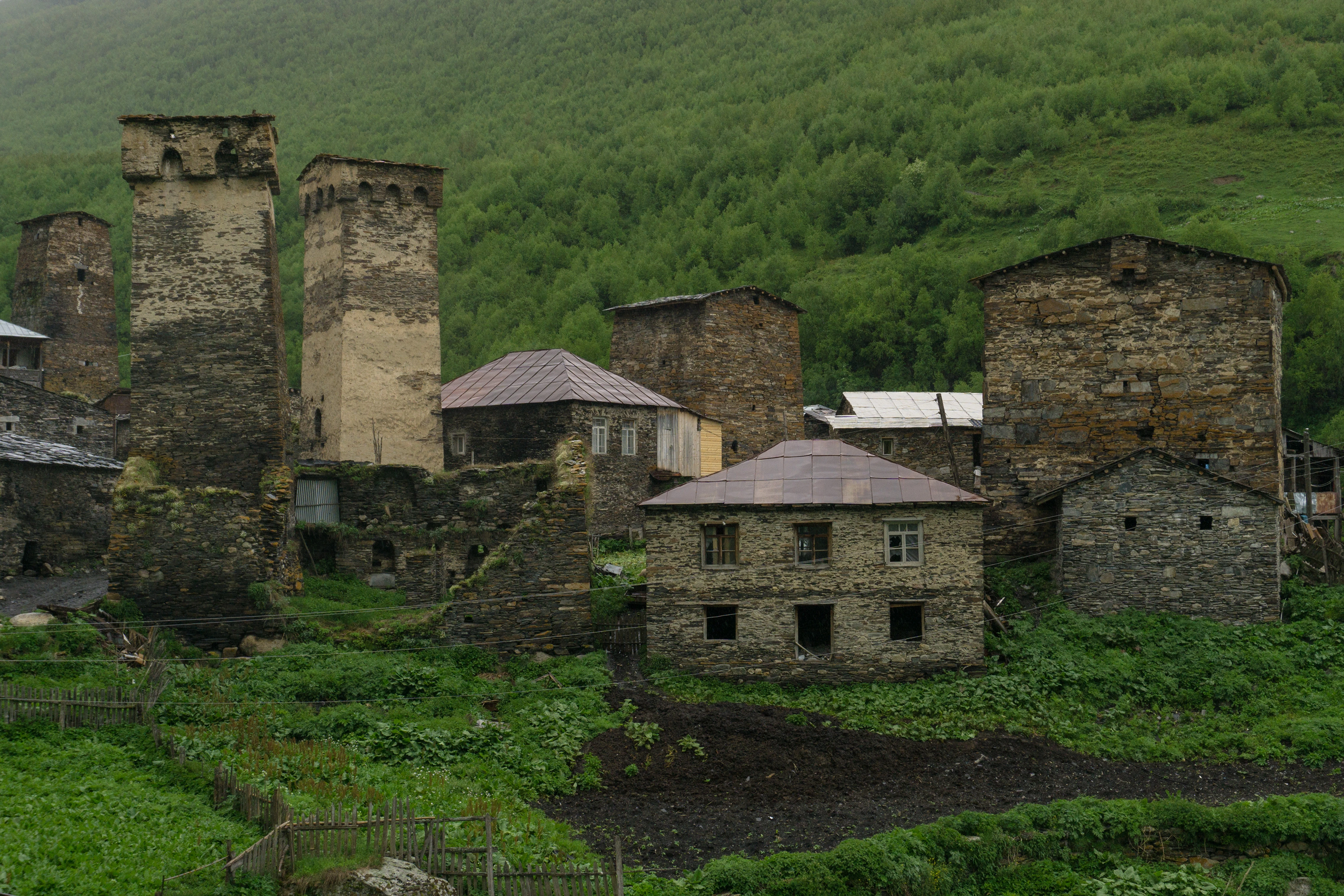
Upper Svaneti in the World HeritageThe value of the mountain settlements and tower houses was recognized.2001
International recognition of polyphonyUNESCO proclaimed Georgian polyphonic singing a masterpiece of oral heritage.2008
Polyphony on the Representative ListThe tradition was inscribed on the list of the intangible cultural heritage of humanity.2013
The qvevri method on the UNESCO listThe skills of traditional winemaking and their transmission were recognized.2016
The living culture of three writing systemsThe Georgian writing systems were inscribed on the intangible heritage list.5 June 2018
Documentary photograph of UshguliAleksei Komarov photographs the settlement and towers of Upper Svaneti; the image is used on this page.2018
International recognition of chidaobaThe wrestling and its associated cultural practices were inscribed on the UNESCO list.2024
Population census of Georgia3,304,075 ethnic Georgians were counted in the covered territory.2025
Georgian wheat culture on the UNESCO listThe traditions of growing local wheat, baking and the ritual use of bread were recognized.January 2026
New research on pre-Christian practicesDavid Gagoshidze's work on the cult rooms of Dedoplis Gora was published in the American Journal of Archaeology.22 June 2026
Publication of detailed census resultsGeostat published data on the ethnic composition, language and religion of the population.
Cuisine
Khachapuri
Different regions have their own variants of bread with cheese filling. Imeretian, Megrelian and Adjarian khachapuri differ in shape and preparation; there is no single universal recipe.Khinkali
Dough products with filling are especially linked with the Eastern Georgian and mountain culinary tradition. Recipes and size changed as the dish spread in urban settings.Pkhali, lobio and walnut sauces
Greens, vegetables, beans and walnuts form an important part of the cuisine. The set of products and spices depends on the region, season and family tradition.Qvevri and winemaking knowledge
The clay vessel is used for making and storing wine; the skills are passed on in families and communities. The UNESCO list includes the traditional method, not any wine produced in Georgia.Bread and the agricultural calendar
The cultivation of local wheat varieties, the baking and distribution of ritual bread are connected with holidays and joint labour. This living tradition was recognised by UNESCO in 2025.
Adats and traditions
Supra
The feast is a space of communication, toasts, family memory and hospitality. Its order depends on the occasion and local tradition.Tamada and the word
The toastmaster sets the sequence of toasts and maintains respectful conversation. Eloquence and knowledge of people matter more than the idea of a feast as a competition.Community and the transmission of skills
Joint field work, the baking of ritual bread and festivals unite generations. Knowledge is passed on through participation in family and community events.Chidaoba
Traditional wrestling combines athletic skills, music, clothing and rules of conduct. UNESCO inscribed this practice on the Representative List in 2018.
Clothing
Traditional costume
Dances
Kartuli
The paired dance is built on the interaction of the performers, restraint and expressiveness of gesture. Its modern stage form develops in professional choreography.Khorumi
The collective dance is associated with Adjara, Guria and Shavshet-Imerkhevi. Studies record local variants and various choreographic formations.Adjarian gandagana
A regional tradition with characteristic movement and interaction between men and women. Concert arrangements should be distinguished from specific recordings of local performance.
Music
Crafts
Ceramics and qvevri
The making of large clay vessels requires special knowledge of the material, firing and use. The craft is linked to the winemaking culture of communities.Textiles and ornaments
Embroidery, gold thread work, and the working of silver, wood and horn are represented in museum collections with specific places and dates of acquisition.The traditional house
Stone and wooden construction differed between the lowlands and the mountainous regions. The ethnographic museum preserves authentic buildings transported from various regions.
Memorable Places
Mtskheta
Jvari, Svetitskhoveli and Samtavro are the most important monuments of church architecture and cultural memory. The complex is included in the World Heritage List.Gelati
The monastery was founded in 1106 under David the Builder. It was an important centre of education, art and book culture.Upper Svaneti
Villages with tower houses preserve the features of mountain settlement, construction and economy. The UNESCO property includes a specific historical landscape.Vani
Archaeological finds make it possible to study Colchian society. The UNESCO Tentative List is not equivalent to inscription on the World Heritage List.Giorgi Chitaia Ethnographic Museum
The open-air museum in Tbilisi shows regional types of dwelling, farm buildings and crafts. It was founded in 1966.
Names
Men's
- Mamuka (Georgian; derived from the word "mama" "father")
Women's
- Mzia (Georgian)
- Ia (Georgian)
- Natela (Georgian)
- Tsiala (Georgian)
People and cultural memory
Shota Rustaveli
Author of "The Knight in the Panther's Skin", the central monument of Georgian literature. The history of the text is studied through manuscripts, commentaries and translations.Ilia Chavchavadze
A nineteenth-century writer, publicist and public figure. His legacy is linked to the development of education, the press and national culture.Saint Nino
Venerated as the enlightener of Georgia. Scholarly study compares the early accounts of the conversion of Kartli with the later hagiographic tradition.Giorgi Chitaia
Ethnographer, founder of the open-air museum in Tbilisi. His work is linked to the study and preservation of regional forms of folk culture.
Media
Photo gallery
Authorship and licenses are indicated in the image captions.