

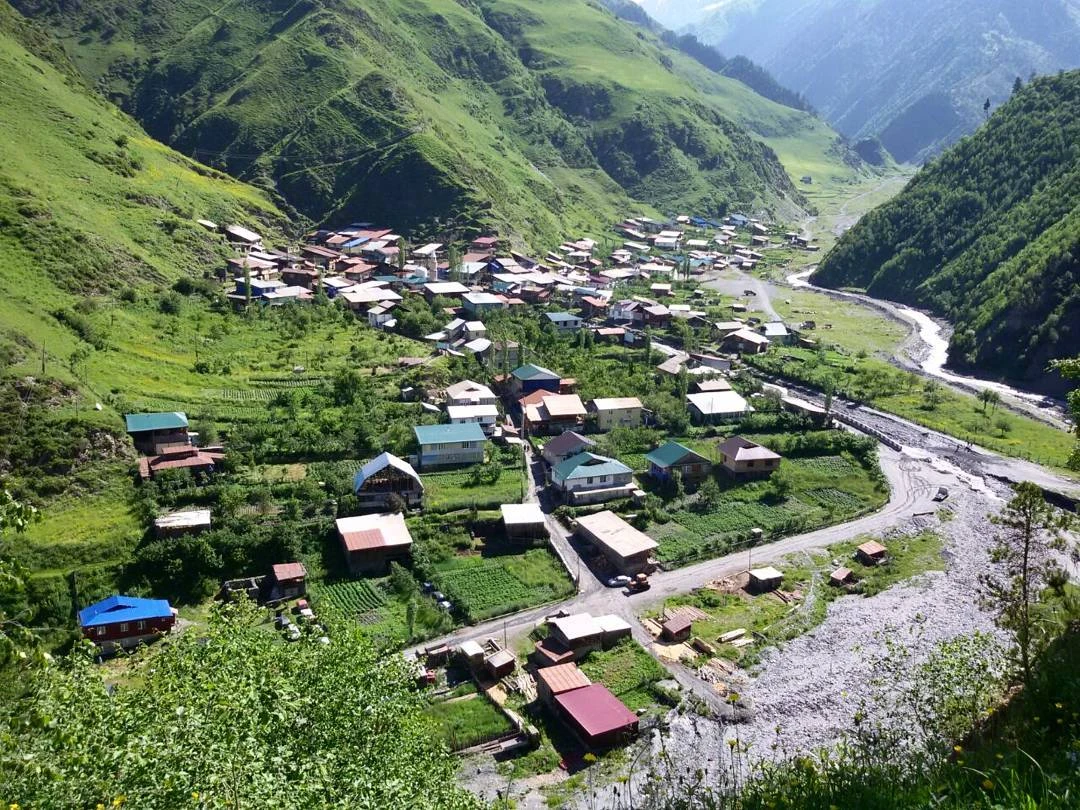
North Caucasus · Dagestan
Tsez (Didoi)
Tsez
Language
Tsez (Didoi)
Family
Nakh-Daghestanian family · Tsezic branch
Population
14,881 identified as Didoi in Russia (2021)
History
Settlement and local communities
Language
Faith and history of religions
Verified information
Language
- Tsez (Dido) is an independent language of the Tsezic branch.
- The Tsezic group includes five related languages.
Settlement and population
- 2021 census: Russia 14,881 Dido; Daghestan 14,770. Counted within the category of Avars.
Culture and daily life
- A spindle from Kidero of the early 20th century is held in the REM under number 1896-116.
History
- The Tsuntinsky District was formed on 25 December 1930.
- Studies describe the local survival of earlier cults in the 19th century.
Detailed chronology
Pre-Islamic heritage
Stones, mountains and former deitiesReconstructed from later descriptions and field records.Middle Ages
Christian influence from GeorgiaResearchers note its incomplete spread.15th century
The early stage of Islamization in an academic essayThis refers to the beginning of a long process.Late 17th–early 18th century
Strengthening of IslamizationPolitical influence of neighbouring centres is combined with religious changes.18th century
Unions of rural societiesCommunities preserve local forms of governance.19th century
Preservation of former cultsLegends about Asakh and Akdi describe resistance to the abandonment of stone shrines.Early 1840s
Participation in Shamil's movementThe military and political position of local societies changes.Second half of the 19th century
District administrationTsez villages are incorporated into the new system of governance of Dagestan.Late 19th–early 20th century
Documentation of mountain lifeTravellers and ethnographers describe economy and culture.1910
Serzhputovsky's expeditionObjects, photographs and field records are collected.1917
Publication of the journey to Mountain DagestanSerzhputovsky's work with ethnographic observations is published.1926–1927
The work of K. P. DanilinaMaterials on clothing, dwelling, food and rites are collected.25 December 1930
Formation of the Tsuntinsky DistrictCreated on part of the territory of the Tsumadinsky District.1936
Study of the sound systemA work by I. V. Megrelidze is published.1940
Description of declensionMegrelidze publishes a study of Dido declension.7 June 1944
Abolition of the districtThe territory was transferred to the Tsumadinsky District.Soviet period
Restriction of religious institutionsThe conditions of education and public religious life are changed.15 October 1955
Restoration of the districtThe Tsuntinsky District is re-established with its centre in Bezhta.1959
The book by E. A. BokarevThe work "The Tsez (Dido) Languages of Dagestan" is published.1963
Comparative description of the languageA work by D. S. Imnaishvili on Dido, Ginukh and Khwarshi is published.1 February 1963
A rural districtThe administrative status changes.12 January 1965
Transformation into a districtAnother administrative reform is completed.Late 1980s–1990s
Religious revivalThe open activity of communities and religious education expand.1990s
Development of written publicationsLiterary materials in Cyrillic script appear.1999
Tsez-Russian dictionaryThe dictionary by M. Sh. Khalilov is published.2000
Historical and ethnographic monographA study by Luguev and Magomedov is published.2010
Publication of Tsez folkloreTexts by A. K. Abdulaev and I. K. Abdullaev are published.2015
Study of complex sentencesA work by Maria Polinsky is published.2016
Mythology and IslamSeferbekov and Magomedov publish a study of Tsez beliefs.9 June 2016
Documentary photograph of ShaitliA photograph by Asharitdag is used on the page.1 October 2021
Census reference date14,881 Dido people counted in Russia, 14,770 in Dagestan.2023
Study of language vitalityZ. M. Khalilova examines the Tsez group on Lingforum.2024
Publication of a museum photo albumThe REM presents expedition photographs from 1910.
Cuisine
Khinkal
In historical descriptions, it was prepared from various types of flour and served with broth, meat, and seasonings. The shapes of the dough and the methods of serving varied.Stuffed dishes
Under the local names khinkala, products with meat, nettles, and cheese, close to kurze, are described. These are records of a specific food tradition.Dairy products and baked goods
Milk, cheese, butter, flatbreads, porridges and pies are linked to pastoral and agricultural economy. The family cuisine changed together with trade connections.
Adats and traditions
Mutual assistance
Help to relatives and neighbours is especially important during farm work and natural disasters. Historical descriptions note the connection between the volume of support and the degree of kinship.Igbi and the mummers
In local variants of the festival, youths in costumes and wolf masks take part. The festival combines collective play, music and rural sociability.Winter fire
M. K. Musaeva describes bonfires, round dances and fire amusements at the beginning of February. This is an ethnographic description of the past, not an instruction to reproduce the rite.
Clothing
Dances
Festive round dance
Round dances around the fire are mentioned in historical descriptions of Igbi. The dance is linked to collective calendar action.Mummers and stage performance
Masks, movements and music form a festive performance. A modern ensemble programme may rework rural forms.
Music
Crafts
Spinning
A spindle from Kidero of the early 20th century is kept in the Russian Ethnographic Museum. The wooden crosspiece and woollen threads document domestic work with fibre.Wool, wood and stone
Domestic crafts provided clothing, utensils and construction. Their forms are linked to the available materials of mountain economy.Dwelling and farm buildings
Serzhputovsky's photo collection shows houses, sheds, granaries and canopies, allowing the study of construction techniques in specific villages.
Memorable Places
Kidero
The historical centre of local societies. Its inhabitants and household items are represented in museum collections of the early 20th century.Shaitli
A Tsez village with a local dialect. A documentary photograph shows its buildings and the mountain valley in June 2016.Asakh and Akdi
Villages with which published legends about the white stones and the change of religious life are connected.Tivi and communities outside the mountain area
A resource of the Russian Academy of Sciences notes Tsez speech in Tivi in Georgia, as well as in resettlement villages of Dagestan and in the diaspora.
Names: examples of usage
Men's
Women's
People and cultural memory
A. K. Serzhputovsky
An ethnographer whose 1910 expedition preserved descriptions, objects and photographs of the culture of the Dido people.S. A. Luguev and D. M. Magomedov
Authors of a historical and ethnographic study of the Dido people, based on written and field materials.A. K. Abdulaev and I. K. Abdullaev
Collectors of Tsez folklore texts included in the 2010 edition and the annotated electronic corpus.M. Sh. Khalilov
Compiler of the 1999 Tsez-Russian dictionary used in the study of the language.
Media
Photo gallery
Authorship and licenses are indicated in the image captions.