North Caucasus · Dagestan
Avars
Magharulal
Language
Avar (Magharul mats)
Family
Nakh-Daghestanian family, Avar-Andic branch
Population
1,012,074 in Russia (2021 census)
History
Language
Faith and history of religions
Verified information
Language
- Avar belongs to the Avar-Andic branch of the Nakh-Daghestanian family.
- Cyrillic script has been used since 1938.
Settlement and population
- In the census conducted in 2021, 1,012,074 Avars were counted in Russia. This is not the number of Avar speakers.
Culture and daily life
- Untsukul is the centre of the art of metal inlay on wood.
- Women's costume differed among the local Avar communities.
History
- The epigraphic date of 1475–1476 relates to the spread of Islam in Gidatl.
- Shamil's correspondence is documentary material on the history of the imamate.
Detailed chronology
Early Middle Ages
Mountain societies and Sarirwritten testimonies describe the political entity of Sarir. Its borders and the composition of its population did not coincide with modern ethnic and administrative boundaries.7th–9th centuries
Arab campaigns in DagestanEarly Muslim contacts are connected with military and political events in the Eastern Caucasus. This is not the date of conversion of all Avar societies.Middle Ages
Christian connectionsTemples, funerary monuments and inscriptions testify to a Christian presence in mountainous Avaria. It coexisted with local beliefs.13th–14th centuries
Change in the religious environment of KhunzakhThe historiography of this period examines the strengthening of Islamic institutions. The specific dates and stages of the process remain a subject of comparison of materials.1475–1476
Epigraphic date of the Islamization of GidatlThe date of 880 AH is associated with the name of Hajji Udurat. It refers to a specific society, not to the conversion of all Avars.Late 15th and 16th centuries
Continuation of the Islamization of neighboring societiesPreaching and connections between local centers spread Islam further. The process was not completed simultaneously in all areas.Late Middle Ages and Modern Era
Communities and the domain of the nutsalsRural unions and the Khunzakh domain constituted different forms of political organization. There was no single unchanging structure of all societies.17th–18th centuries
Terrace farming and exchangeFarming, livestock breeding, horticulture and crafts connected the mountain and lowland areas.1741
Resistance to the troops of Nader ShahThe military operations in Andalal became an important episode in the history of mountainous Dagestan. The details of the legends require separation from documentary evidence.Late 18th and early 19th centuries
The policy of the khanate and independent societiesRelations with neighboring domains and the Russian Empire differed between societies and changed over time.1820s and 1830s
The movement for Sharia and the imamateThe strengthening of Muslim institutions was connected with the political movement of the highlanders. It relied on an already existing Islamic tradition.1832
The death of Ghazi MuhammadThe first imam died during the storming of Gimry. The highlanders' movement continued under the leadership of subsequent imams.1834
Shamil becomes imamA long period of Shamil's leadership began; surviving documents make it possible to study the administration and connections of the imamate.1839
The siege of AkhulgoThe fighting led to the destruction of the fortress and heavy losses. Shamil managed to escape; the imamate continued to exist.1840s and 1850s
Naibdoms and Arabic-language correspondenceOrders, complaints and letters show the everyday tasks of authority, supply, justice and relations between societies.1859
The fall of GunibThe capture of Shamil ended the history of the imamate as a functioning state. The war in other territories of the Caucasus continued.Second half of the 19th century
Imperial administration and changes in daily lifeNew administrative institutions, roads and economic ties changed living conditions. Local customs and Muslim practices were preserved in the changed environment.1889
Scholarly publication "The Avar Language"The third volume of the works of P. K. Uslar was published, an important source on the history of the study of the language.Late 19th and early 20th centuries
Singer-poets and the literary traditionThe work of Mahmud of Kakhab-Roso combined poetry and performance. The oral heritage became the subject of later publications.Early 20th century
Historical group portraitProkudin-Gorsky photographed women in Dagestan. Scholarly attribution links the portrait to the Avar village of Arakani; catalog dates differ.20 January 1921
Formation of autonomous DagestanThe decree of the All-Russian Central Executive Committee became an administrative milestone for the peoples of the region. It is not the date of the emergence of the Avar people.1920s
School and the new written cultureLatin script and the development of printing changed the forms of education and literary communication. The Arabic-script tradition had existed earlier.1930s
Collectivization and restrictions on religionSoviet transformations affected rural life and religious institutions. The family transmission of knowledge did not cease entirely.1938
Transition to the Cyrillic scriptThe Cyrillic basis became the modern official script of the Avar language.1943
Rasul Gamzatov's first bookThe poetry collection was published in the Avar language. The poet's works were later translated into many languages.1945–1950
Gamzatov's studies at the Literary InstituteThis period became an important stage in his professional literary biography.1951
Literary institutions of DagestanRasul Gamzatov headed the Union of Writers of Dagestan. Avar literature developed within the republic's shared multilingual cultural space.1950s and 1980s
Changes in everyday dietUrban life, factory products and interethnic contacts broadened the diet. Traditional cuisine did not remain unchanged.1967
Opening of the Gamzat Tsadasa MuseumThe poet's house in Tsada became a literary memorial museum preserving personal belongings and cultural memory.Late 1980s and 1990s
Open Islamic revivalOpportunities expanded for the activity of mosques, education and pilgrimage. Various projects for understanding the religious tradition emerged.1990s and 2000s
New cultural and religious tiesMigration, media and cross-border education changed the conditions for transmitting language, culture and faith. These processes manifested differently in different communities.2002
Ahmed Islammagomedov's monographA historical and ethnographic study of the Avars of the 18th and early 20th centuries, based on written and field materials, was published.2003
The end of Rasul Gamzatov's lifeThe poet died on 3 November. His manuscripts, editions and translations continue to be studied in archives and libraries.2021
Census population in Russia1,012,074 people were counted in the "Avars" category. The figure does not equal the number of language speakers or the total number of the people worldwide.2023
The centenary of Rasul GamzatovArchival publications presented documents about the poet and his literary connections.2023
A study of stone carvingSpecialists from the Institute of Oriental Studies of the Russian Academy of Sciences published a study of motifs and protective images of mountainous Dagestan.
Cuisine
Khinkal
Boiled pieces of dough are served with meat, broth and sauce. Among the Avars, various local methods of preparation are known; the fluffy wheat version is especially recognizable. Khinkal should not be confused with Georgian khinkali.Botishal and chudu
Thin dough products with filling. Islamagomedov describes variants with cottage cheese, potato and herbs, as well as differences in serving. A family recipe is not a mandatory standard for all villages.Urbech
A paste made from ground seeds or kernels; historical descriptions mention various source products and combinations with butter and honey. It belongs to the common culinary heritage of Dagestan, not to just one people.Everyday and modern food
Flour and dairy products, grains, herbs, fresh and preserved foods made up different parts of the diet. The modern urban table includes borrowed dishes; a festive menu does not reflect the entire history of food.
Adats and traditions
Jamaat
The rural community decided matters of land, water, mutual aid and public order. The structure and degree of independence of communities varied by locality and era.Tukhum and family memory
Kinship associations preserved ties of descent and support. A tukhum is not identical to a village, a political union or a modern family.Hospitality and mutual aid
Receiving a guest, respectful communication between generations and joint work occupy an important place in ethnographic descriptions. The custom is considered with regard to time and circumstances, not as a characteristic of every person.Adat and Sharia
Local customary norms interacted with Islamic law. There were both harmonization and conflicts between them. Historical forms of punishment and blood feud are not presented as mandatory norms of modern life.
Clothing
Traditional costume
Dances
Social and wedding dance
Dance was part of festive communication, wedding events and leisure. The forms of performance depended on local tradition; the common stage name "Lezginka" does not exhaust all the differences.Folklore and stage production
A professional ensemble transforms traditional movements for the concert stage. A stage number cannot automatically be considered an unchanged ritual or an exact picture of the dance of past centuries.
Music
Crafts
Untsukul inlay
Metal elements forming a pattern are set into a wooden base. Museum collections contain canes, boxes and other products of this craft. Its technique must not be confused with metal inlay on metal.Textiles and ornaments
Weaving, embroidery, wool processing and the making of ornaments are connected with clothing and daily life. Object 2262-20 of the Russian Museum of Ethnography shows a combination of fabric, gold embroidery and silver in a headdress of the early 20th century.Stone and wood in the dwelling
The working of stone and wood was part of construction and domestic culture. Stone images and ornaments require study based on specific monuments; their meaning does not always reduce to a single religious interpretation.
Memorable Places
Khunzakh
The historical center of mountainous Avaria, associated with the domain of the nutsals. Its political and religious history changed; medieval domains cannot be represented within modern administrative borders.Akhulgo
The site of the siege of 1839 and of historical memory of the Caucasian War. In description it is important to distinguish the event itself, later depictions of the battle and the modern memorial complex.Gunib
The events of 1859 are connected with the end of the existence of Shamil's imamate. This date does not mean the end of the entire Caucasian War in all parts of the Caucasus.Tsada and the Gamzat Tsadasa Museum
The literary and memorial museum was opened in the poet's house in 1967. It presents family, literary and everyday history.Untsukul
One of the centers of artistic woodworking. Metal inlay is a living craft, preserved in the works of masters and in museum collections.
Names
Men's
- Barti (Avar)
- Batsav (Avar)
Women's
- Bertsinai (Avar)
- Gurginai (Avar)
- Gitinai (Avar)
- Mesedu (Avar)
People and cultural memory
Shamil, 1797–1871
A native of Gimry, imam of Dagestan and Chechnya in 1834–1859. His political, spiritual and military activity is studied from various materials, including surviving Arabic-language correspondence.Mahmud of Kakhab-Roso
An Avar poet and singer whose work influenced later literature. Biographical legends should be distinguished from documented information.Gamzat Tsadasa
Poet, satirist and enlightener. A museum in the village of Tsada is dedicated to his literary legacy and domestic world.Rasul Gamzatov, 1923–2003
Avar poet, author of poetry, prose and journalism. Born in Tsada; his first book in the Avar language was published in 1943. Materials from his literary activity are preserved in RGALI.
Media
Photo gallery
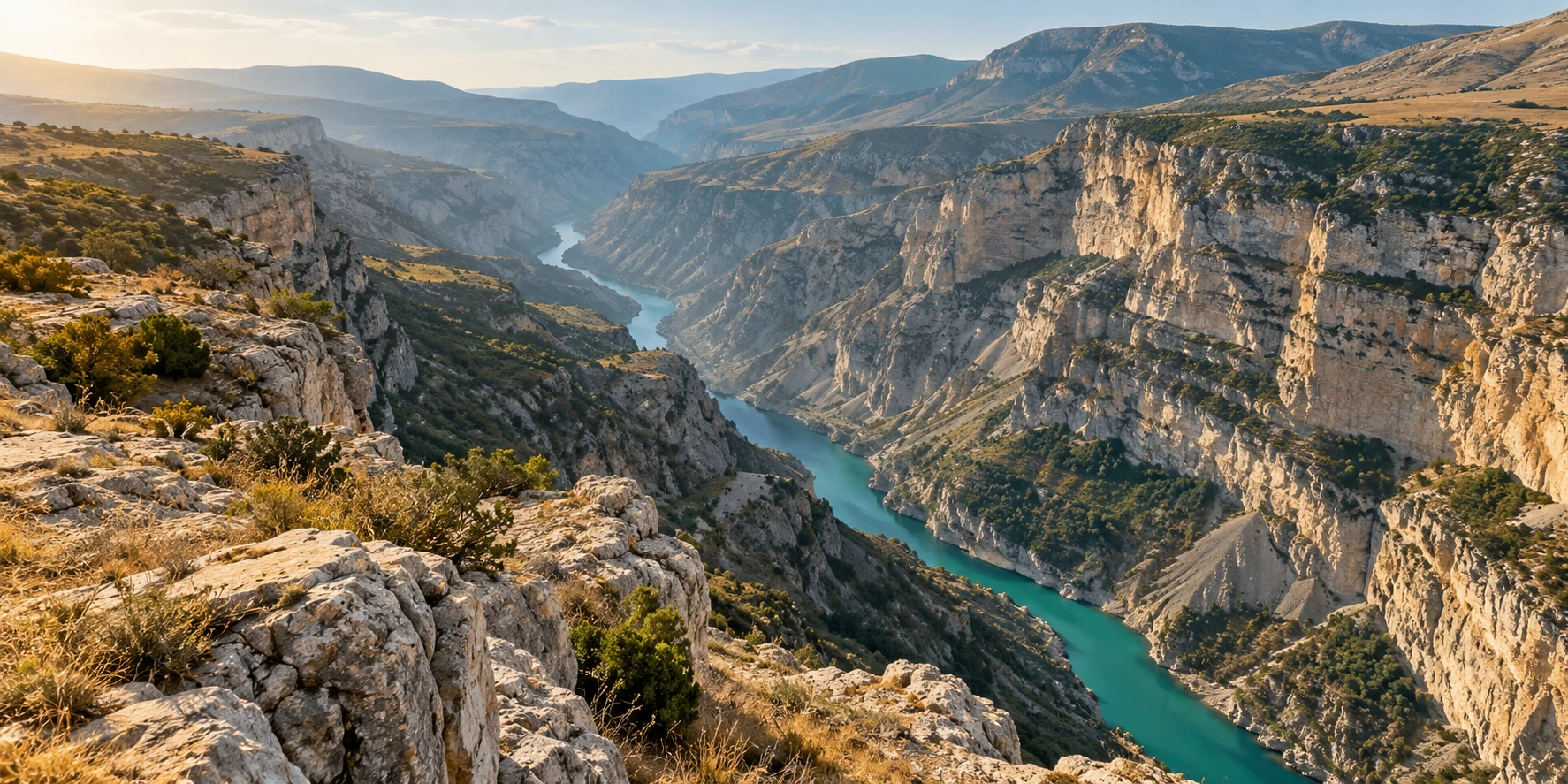
The illustrations were created for the portal and are not documentary photographs.