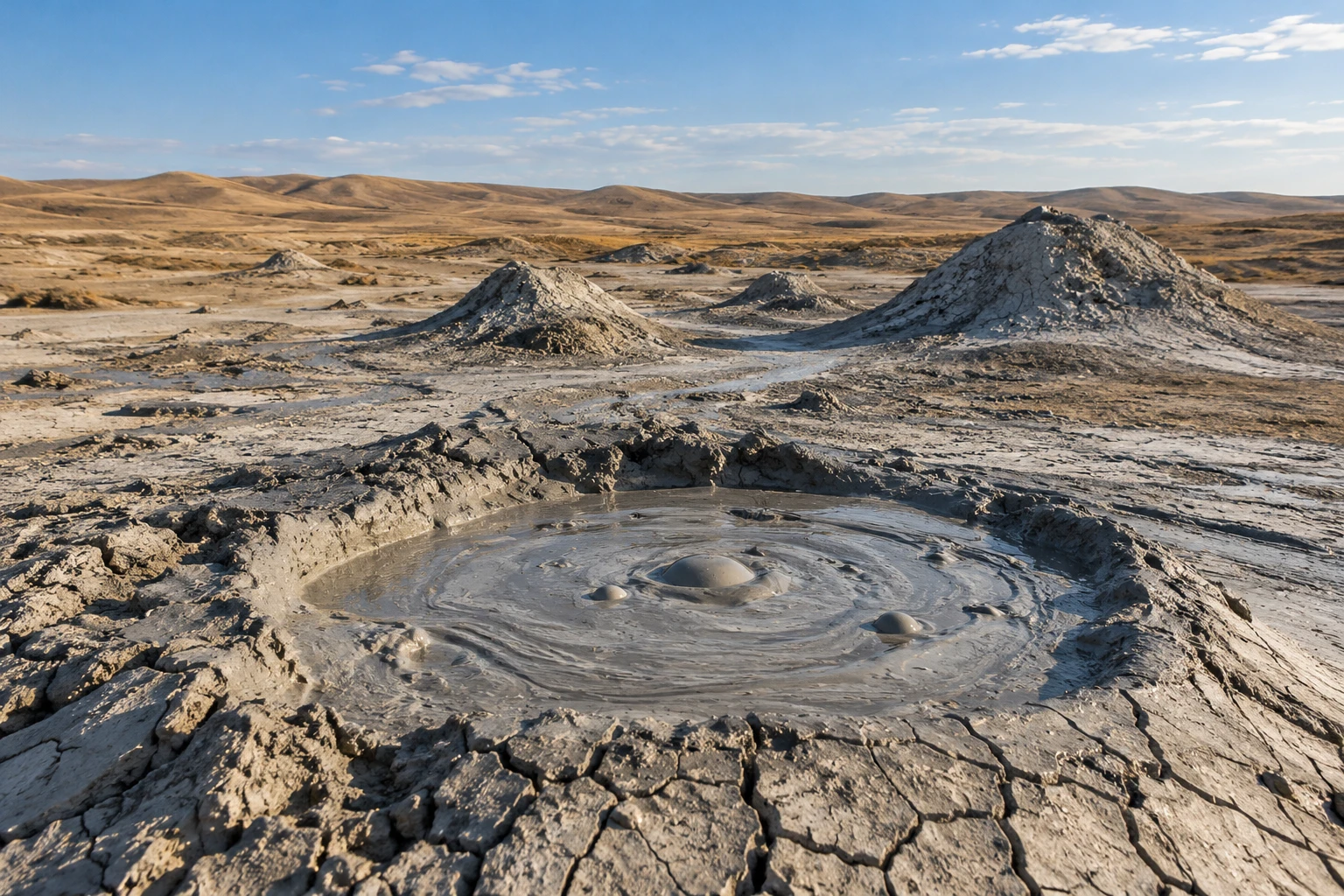
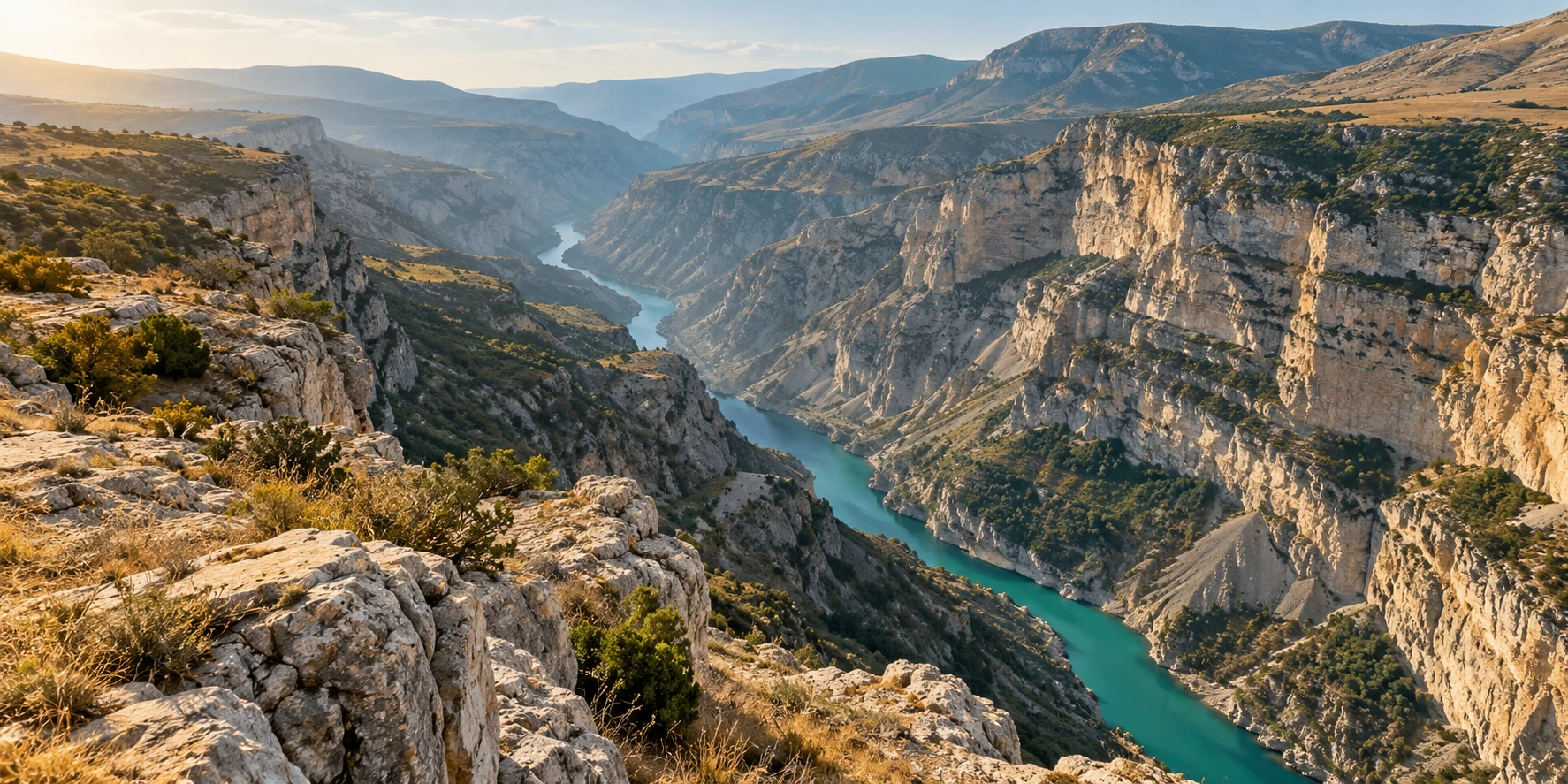
Landscape inspired by the mud volcano landscapes of Azerbaijan · illustration
Landscape inspired by the mud volcano landscapes of Azerbaijan · illustration · Artistic illustration

10,2624 million

residents as of 1 January 2026, official estimate of the State Statistics Committee

86.6 thousand km²

area according to the State Statistics Committee, including islands in the Caspian Sea

5

UNESCO World Heritage sites: four cultural and one natural

Geography in Detail

Regions and settlements

The administrative structure of Azerbaijan includes districts, cities of republican subordination and the Nakhchivan Autonomous Republic. For ease of searching, the districts are grouped into 14 economic zones.

Settlements
4586
Territories
14

The directory contains 4,586 settlements: 79 cities, 263 towns and 4,244 villages. The list according to the 2024 administrative division was verified on 28 October 2026. The national spelling is preserved in parentheses, and the district or urban territory is indicated after the period. The Russian rendering of the names aids searching. Economic districts are shown separately from administrative districts.

Capital and economic districtBakuCenter: Baku
Autonomous republicNakhchivan Autonomous RepublicCenter: Nakhchivan
Economic districtAbsheron-Khizi
Economic districtMountain Shirvan
Economic districtGanja-Dashkasan
Economic districtKarabakh
Economic districtGazakh-Tovuz
Economic districtGuba-Khachmaz
Economic districtLankaran-Astara
Economic districtCentral Aran
Economic districtMil-Mughan
Economic districtShaki-Zagatala
Economic districtEast Zangezur
Economic districtShirvan-Salyan

Geography and population

Azerbaijan is located in the South Caucasus, on the western coast of the Caspian Sea. Its main natural regions include the Greater and Lesser Caucasus, the Kura-Aras Lowland and the Talysh Mountains. Differences in relief and proximity to the Caspian influence local climatic conditions. According to official table 1.15, as of 1 January 2026 the population was estimated at 10,262.4 thousand people, including 2,356.2 thousand in Baku. The country's area is given as 86.6 thousand km², including islands in the Caspian Sea. This is a dated statistical estimate, not the results of a new 2026 census. The Nakhchivan Autonomous Republic is part of Azerbaijan and has a special constitutional status. Administrative districts, statistical economic regions and historical-cultural areas serve different functions and are not interchangeable maps.

Related articles about peoples

Cultural and natural regions

Baku and Absheron
The Caspian coast, the capital agglomeration, the Old City and landscapes associated with oil, gas and mud volcanism.
Shaki and the northwest
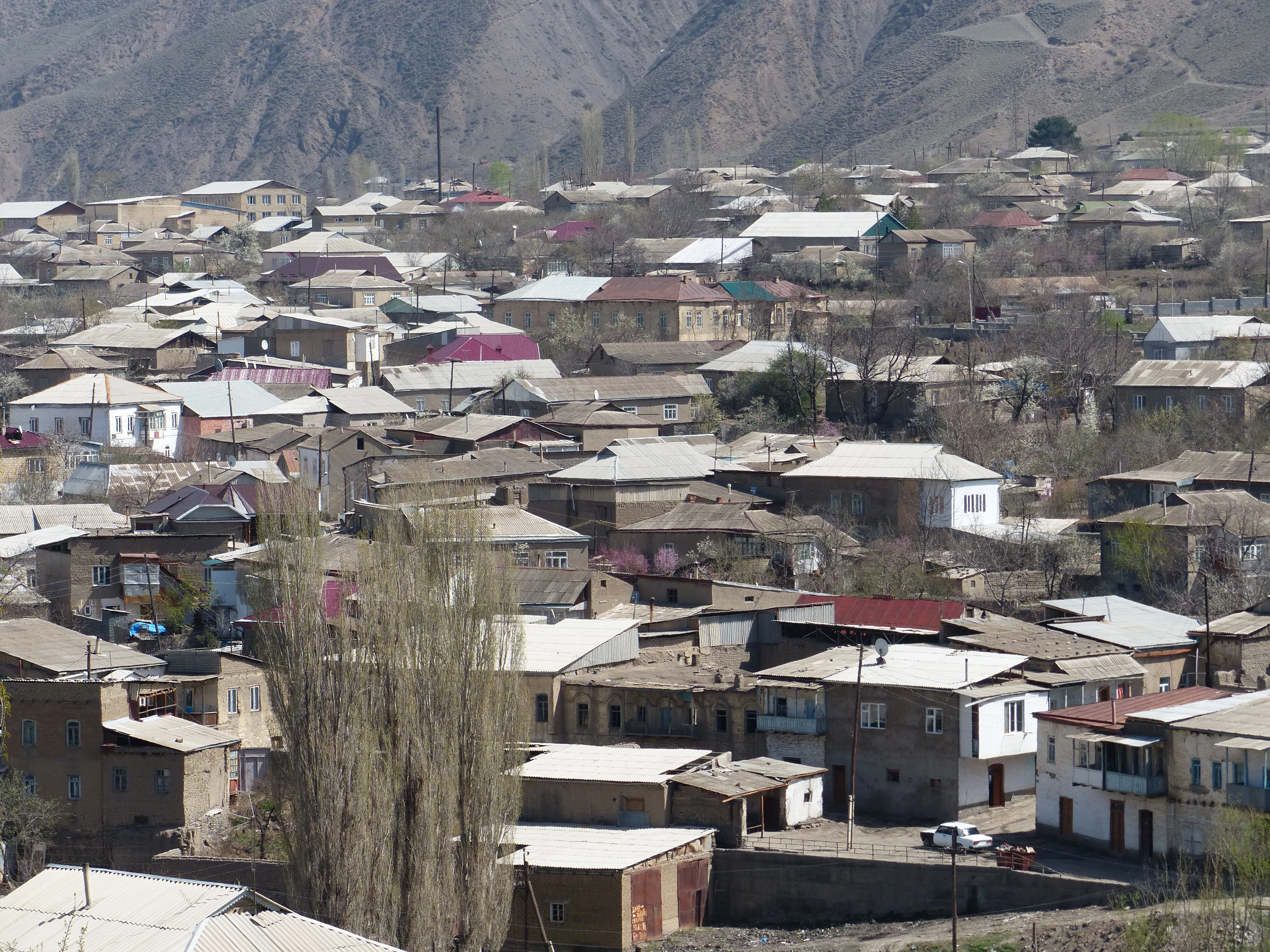
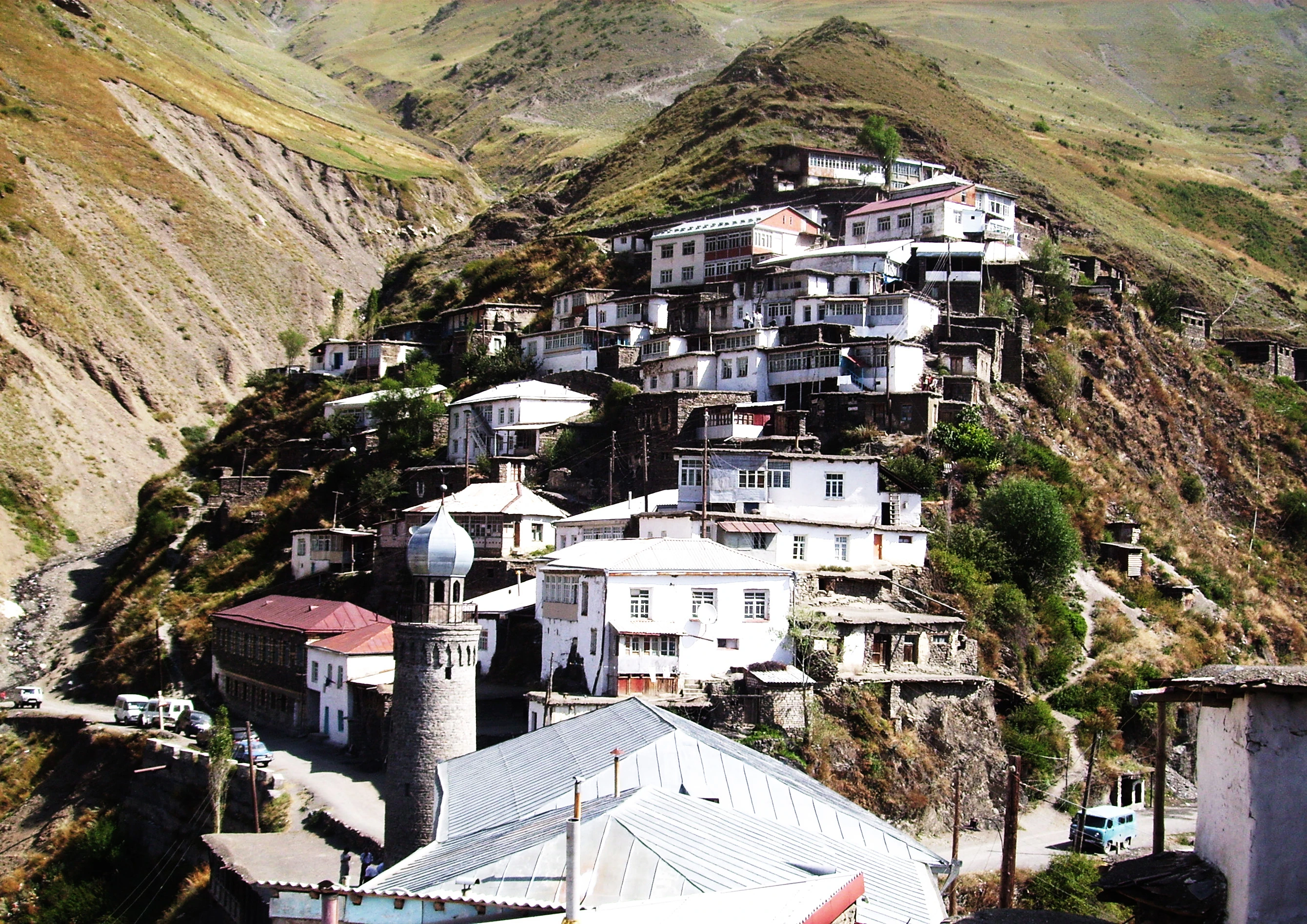
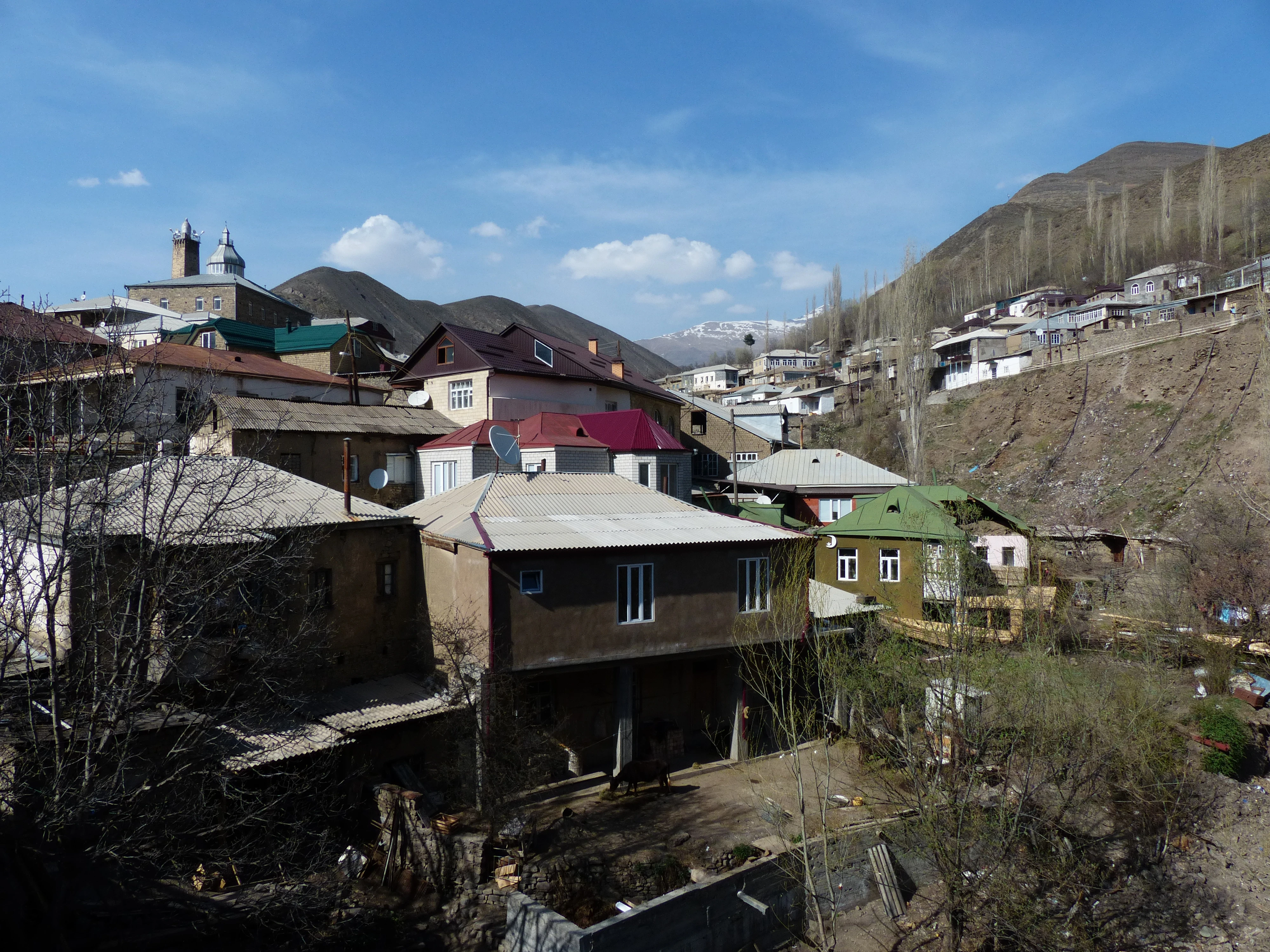
Foothill towns, sericulture, the Khan's Palace and craft traditions. Khinalig and the Köç Yolu route form a separate cultural landscape of the Greater Caucasus.
Kura-Aras Lowland
Plain and valley territories between mountain systems. Physical-geographical regions differ from administrative districts and statistical economic regions.
Lankaran and the Talysh Mountains
The southeast of the country with humid forest landscapes and the Talysh cultural and linguistic tradition.
Nakhchivan Autonomous Republic
An autonomous republic within Azerbaijan, separated from the country's main territory. Its legal status is established by a separate chapter of the Constitution.

Languages and cultural diversity

Azerbaijani

Azerbaijani belongs to the Oghuz branch of the Turkic family. Its state status is established by Article 21 of the Constitution. Related Turkic languages, Iranian cultural influence and modern state affiliation describe different phenomena.

Lezgian and other languages of the Caucasus

Lezgian belongs to the Nakh-Daghestanian languages. The country is also home to Avar, Tsakhur, Rutul, Khinalig, Udi and other communities with their own linguistic traditions. The group names in the census and linguistic classification are not the same thing.

Talysh and Tat varieties

Talysh belongs to the Northwestern Iranian languages. Tat and Judeo-Tat varieties are also considered within Iranian linguistics, taking into account their own communal traditions. They should not be merged with Azerbaijani into a single language branch or regarded as names of a single people.

Udi and the early written tradition

Studies of Caucasian Albanian palimpsests examine the connection between the language of these Christian texts and modern Udi. This is the result of comparative linguistic analysis, which does not mean that the ancient state and one modern nation are identical.

Other communities and the scope of statistics

The links reflect the portal's available articles. The ethnic composition is given according to the 2019 census, which, according to a note by the State Statistical Committee, did not cover the population of territories that were then outside the control of the Azerbaijani authorities. The data predate the events of 2020 and 2023 and do not describe the present-day distribution of all communities.
Lezgins, Talysh and Avars
The 2019 census in official rounded tables: 167.6; 87.6 and 48.6 thousand people respectively. These figures are not an estimate for 2026.
Tats, Russians, Jewish and other communities
The official table distinguishes different ethnic categories. Nationality is not the same as religion or language.
Udis, Khinaligs and other small groups
Separate accounting categories and cultural traditions. When working with small numbers, it is especially important to take rounding and census methodology into account.

History of Azerbaijan

Text size
Text size: 100%

Chapter 1 · Prehistoric times and subsequent eras

Gobustan rock art

Gobustan preserves rock images, traces of settlements, caves and burials. The monuments belong to different eras and make it possible to study people's activities, the natural environment and the use of space. The images are not the simultaneous work of a single community.
UNESCO identifies three areas of the cultural landscape and more than six thousand engravings. They should be considered according to archaeological context, rather than automatically attributed to one modern people. The protected World Heritage site and the larger territory of the reserve have different boundaries.
Page 1 of 1in chapter 1

The historical overview distinguishes archaeological cultures, Caucasian Albania, medieval domains, the republic of 1918–1920 and the modern state. Geography and political names have changed.

Five World Heritage properties

Azerbaijan has four cultural and one natural UNESCO World Heritage property. These are the Old City of Baku, Gobustan, the historic centre of Sheki, the cultural landscape of Khinalig with the Köç Yolu route, and the Azerbaijani parts of the transboundary property "Hyrcanian Forests". Baku was inscribed in 2000, Gobustan in 2007, Sheki in 2019, and Khinalig in 2023. The Hyrcanian Forests were initially inscribed on Iranian territory in 2019, and the Azerbaijani parts were added in 2023. Inclusion on the tentative list is not the same as inscription on the main list. Mugham, carpet weaving and other living traditions are considered under a separate convention on intangible heritage.

Khinalig and the Köç Yolu Route

The property unites a high-mountain village, summer and winter pastures, and a seasonal route about 200 kilometres long. Its scope is therefore broader than the architecture of a single village. The tradition of vertical transhumant pastoralism links different altitude zones and ways of using land. Pastures, temporary camps, terraces, water sources and roads form a living cultural system. Preserving the property is linked not only to repairing buildings but also to the continuation of the local community's economic practices.

Hyrcanian Forests and Mud Volcanoes

The Hyrcanian broadleaf forests stretch along the Caspian coast across the territory of Azerbaijan and Iran. Their natural value is linked to the long history of forest ecosystems, rare species and habitat diversity. The age of a forest ecosystem is not the same as the age of each individual tree. Another characteristic landscape is linked to mud volcanism. NASA Earth Observatory examines the islands off Absheron that were formed by mud emissions and later altered by erosion. Such geological processes differ from an ordinary eruption of molten lava. Access to specific sites and visiting rules must be checked before travelling. The page features an artistic illustration; it does not serve as a route map or a documentary image of any one of the volcanoes.

Religions and the Secular State

The Constitution defines Azerbaijan as a secular republic. Article 18 separates religion from the state and enshrines the equality of religions before the law. These norms should be distinguished from the personal beliefs of residents and from sociological assessments of religious practice. The region's historical environment includes Islamic, Christian, Jewish and other traditions. The monuments of Baku's Old City and early Christian manuscripts reflect different eras and cultural ties. It would be wrong to ascribe the same faith to all members of a single nationality.

Poetry and Written Traditions

Nizami Ganjavi, a medieval poet who wrote in Persian, is associated with Ganja. His cycle Khamsa is known through manuscripts and translations. The geography of the author's life, the language of the works and the contemporary significance of the heritage are separate questions. Ashiq art combines poetry, storytelling, singing and instrumental music. UNESCO notes both the regional characteristics of performance and the participation of various communities of the country in transmitting the tradition. Oral culture and written literature complement each other, preserving different forms of historical memory.

Mugham and the Art of Ashiqs

Mugham is a musical tradition in which improvisation plays a major role. A performance may bring together a singer and musicians playing the tar, kamancha and a percussion instrument. Live versions are passed from masters to students. UNESCO proclaimed the tradition in 2003 and inscribed it on the Representative List in 2008. The art of ashiqs, inscribed in 2009, combines the poetic word, storytelling, dance elements and music, often accompanied by the saz. Regional variants and the individual mastery of the performer are part of the tradition.

Carpets, Kelaghayi and Copper Craft

Azerbaijani carpet weaving includes pile and flat-woven items, various techniques and local ornamental traditions. Skills are passed on through practice and family teaching. It was inscribed on UNESCO's list of intangible heritage in 2010. Kelaghayi are silk women's headscarves. Their making involves weaving, dyeing and applying patterns with wooden stamps; well-known centres are in Sheki and Basqal. The art and symbolism of kelaghayi were inscribed on the list in 2014. The copper craft of Lahij, inscribed in 2015, covers the making, working and decoration of vessels. The mastery is passed on within families and through apprenticeship. Different crafts have their own materials and methods of work.

Pilaf, Dolma and Tea Culture

Azerbaijani pilafs differ in their method of preparation, combinations of ingredients and presentation. In the suzma variety, the rice is cooked and then steamed, while the meat or another component may be served separately. A single festive recipe does not represent the full diversity of everyday cuisine. The dolma tradition includes preparing fillings in leaves or vegetables and sharing a meal. UNESCO describes local variants, the transmission of knowledge within families and the social significance of hospitality; the inscription took place in 2017. This is recognition of a specific cultural practice, not an exclusive right to all similar dishes of the region. Tea culture was inscribed on UNESCO's list in 2022 jointly by Azerbaijan and Türkiye. It is linked to hospitality and social interaction; brewing methods, vessels and accompaniments vary.

University, Archives and the Study of Heritage

The law establishing Baku State University was adopted on 1 September 1919. The history of the institution shows the development of education during the First Republic and subsequent transformations. The date of legal foundation should be distinguished from the start of classes. Contemporary heritage research combines archaeology, linguistics, archival work and the natural sciences. The international DeLiCaTe project studies the early written traditions of the Caucasus, while NASA satellite data help observe changes in mud-volcanic islands. The Azerbaijan National Carpet Museum is one of the institutions where material examples of craft culture can be explored. Opening hours and visiting conditions must be checked on the official website.

Population Movements and Working with Materials

The Karabakh conflict affected various communities. A historical UNHCR report and ICRC testimonies describe forced displacement and the long-term consequences for families. Dates and accounting categories matter: refugees, internally displaced persons and the resident population are not a single statistical aggregate. A UN report of 2 October 2023 records the mass departure of the Armenian population from Karabakh and the need to protect people's rights. It pertains to a specific mission and time, so it cannot be turned into an exact census of the region's population today. The 2019 census has its own caveat about territorial coverage. Its data on ethnic groups are presented as a historical statistical snapshot, not as an assessment of the population composition after the events of 2020-2023.

Media

Mud-volcanic landscapes of Azerbaijan

Landscape inspired by the mud-volcanic landscapes of Azerbaijan · illustration Authentic images of the monuments and satellite imagery are available in the materials.

Anthem

Azərbaycan marşı ("Azerbaijan March")

Azerbaijani

Music by Uzeyir Hajibeyli, lyrics by Ahmad Javad. The anthem was approved on 27 May 1992; the text and music were also enshrined by Constitutional Law No. 1333-VKQ of 2 November 2018.

The official page of the state symbols publishes the text of the "Azerbaijan March" and the history of its approval. The rules for the use of the anthem are established by Law No. 1512-VQ of 19 February 2019. The official text is available via a link to the primary source.

Timeline

Events: 24 / 24

Antiquity and the Middle Ages
Gobustan rock art Monuments from several archaeological eras.
5th–8th centuries
Early writing of the Caucasus Manuscripts of Caucasian Albania are studied together with other written traditions of the region.
12th century
Nizami Ganjavi A poet associated with Ganja, author of the Persian-language Khamsa cycle.
15th century
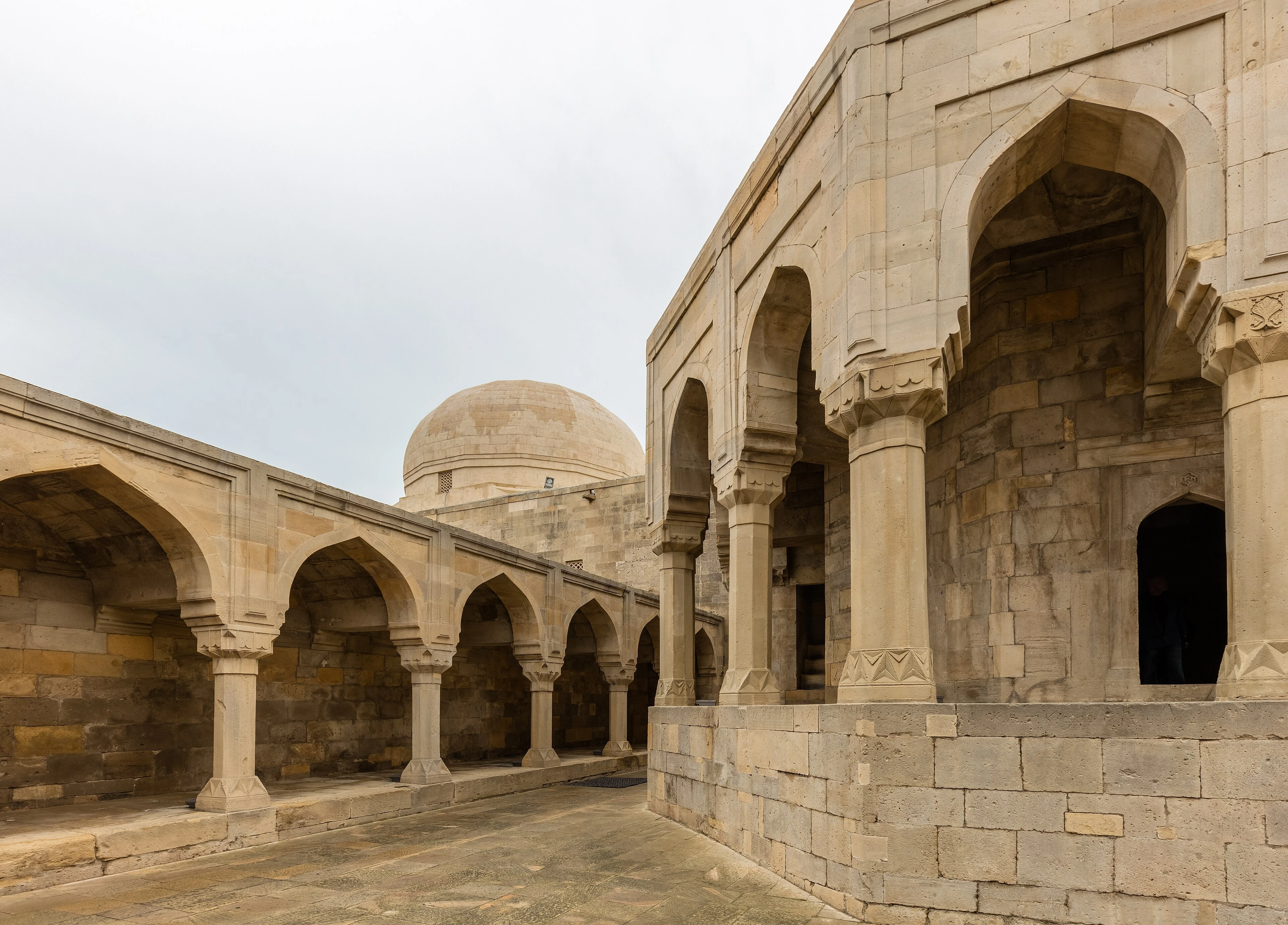
Palace of the Shirvanshahs One of the key monuments of the Old City of Baku.
18th-19th centuries
The commercial flourishing of Shaki Sericulture, merchant houses and the Khan's Palace.
1879
Founding of Branobel The company took part in the development of Baku's oil industry.
1918
Proclamation of independence 28 May: the beginning of the history of the First Republic.
1919
Founding of the university in Baku The law was adopted on 1 September.
1920
End of the First Republic The Red Army arrived in April.
1991
Restoration of independence The Constitutional Act was adopted on 18 October.
1992
Approval of the national anthem The "Azerbaijan March" was approved on 27 May.
2000
Old City of Baku Inscription on the UNESCO World Heritage List.
2007
Gobustan on the UNESCO list Recognition of the cultural landscape of rock art.
2008
Azerbaijani mugham Inscribed on the Representative List; originally proclaimed in 2003.
2009
Ashiq art Inscribed on the UNESCO Intangible Heritage List.
2010
Carpet weaving Inscribed on the Intangible Heritage List.
2014
Kəlağayı The craft and symbolism of silk headscarves were recognized.
2015
Lahij copper craft Inscribed on the Intangible Heritage List.
2017
The dolma tradition Inscription of the preparation and shared meal.
2019
Historic centre of Shaki Inscribed on the World Heritage List.
2022
Tea culture A joint inscription by Azerbaijan and Türkiye.
2023
Khinalig and the Köç Yolu Inscription of the cultural landscape and the transhumance route.
2023
Hyrcanian forests Extension of the World Heritage property to the Azerbaijani sections.
2023
UN mission in Karabakh Visit on 1 October after the mass exodus of the Armenian population.