North Caucasus · Ingushetia
Ingush
Ghalghai
Language
Ingush (Ghalghai mott)
Family
Nakh-Daghestanian family, Nakh branch
Population
517,186 in Russia (2021 census)
History
Language
Faith and history of religions
Verified information
Language
- Ingush is an independent language of the Nakh branch of the Nakh-Daghestanian family.
- The first issue of Serdalo was published on 1 May 1923.
Settlement and population
- According to the 2021 census, 517,186 Ingush were recorded in Russia.
Culture and daily life
- The museum's ethnographic exhibition presents national clothing, jewellery, felt and household utensils.
- Nazmy combine Islamic content with local folklore forms.
History
- The Ingush Autonomous Oblast was established on 7 July 1924.
- The mass deportation of the Ingush and Chechens began in February 1944.
Detailed chronology
Middle Ages
Mountain settlements and stone constructionThe historical valleys of the Assa and Armkhi became a center of settlements and monuments. Specific towers and crypts have different datings.Middle Ages
The Christian church of Tkhaba-YerdyThe construction phases reflect the interaction of local and Transcaucasian traditions. Researchers disagree on the dating of the church's early parts.Before the predominance of Islam
Local shrines and the calendarThe veneration of patrons of nature and communities is known from later ethnographic records. They cannot be turned into an exact year-by-year chronicle of antiquity.17th–18th centuries
Muslim ContactsThe influence of Muslim neighbors grew through trade, migration and preaching. Mountain and lowland societies adopted new practices at different times.1770
Agreements with the Russian AdministrationThe relations of some Ingush societies with Russia were formalized through negotiations and oath agreements. The various local societies cannot be regarded as a single participant in one instantaneous act.First half of the 19th century
Christian Mission and IslamizationThe Orthodox mission operated simultaneously with the spread of Islam. These processes did not repeat the medieval history of Christianity.Mid-19th century
Qadiri PreachingKunta-Haji and his followers played an important role in spreading the Sufi tradition among the Ingush.Second half of the 19th century
Communities of Teachers and StudentsLocal religious networks took shape. The wirds preserved the memory of their founders and transmitted the practices of zikr.1861
The Adoption of Islam in Gveleti: Traditional DatingAlbogachieva's study cites the widespread dating of the conversion of the residents of Gveleti. It does not mean that all former rites ceased in that same year.1870s
Publications of Chakh AkhrievThe works of the Ingush ethnographer introduced readers to legends, beliefs and social life.1891–1892
Dalgat's Field NotesThe researcher observed rites and conversed with bearers of local tradition in mountainous Ingushetia.Late 19th and early 20th centuries
Coexistence of Ritual TraditionsThe spread of Islam did not immediately destroy all former beliefs. Individual local and Christian elements survived in various localities.1902
Project of an Arabic-Script AlphabetStudies of Ingush writing mention Visangirey Dzhabagiev's project. Writing projects preceded a unified school norm.1920s
Development of Latin ScriptAlphabet projects, educational materials and new conditions for written communication were created.1921
The Ingush Okrug in the Mountain ASSRThe early Soviet autonomy preceded the formation of a separate Ingush Autonomous Oblast.1 May 1923
The First Issue of SerdaloThe history of the Ingush newspaper began, and it became one of the main institutions of written culture.7 July 1924
Ingush Autonomous OblastA decree of the All-Russian Central Executive Committee abolished the Mountain ASSR and formed separate autonomous oblasts, including the Ingush one.1928
Zaurbek Malsagov's Book on AlphabetsA publication on cultural work and the unification of writing shows the language debates of the era.1929
Notated Recording of Folk MelodiesThe Ingush Literary Society published five folk melodies recorded by E. A. Kolesnikov.1932
Collecting the Musical HeritageA scholarly expedition collected musical materials in Ingush villages. Such recordings became materials for the subsequent study of folklore.1934
Unification of Autonomous OblastsThe Ingush and Chechen oblasts were merged into the Chechen-Ingush Autonomous Oblast.1936
Formation of the Chechen-Ingush ASSRThe unified autonomous oblast received republican status.1938
Transition of Writing to CyrillicCyrillic script became the basis of modern official Ingush writing.1930s
Anti-Religious RestrictionsState pressure affected religious institutions and the clergy. The family transmission of faith continued under restricted conditions.23 February 1944
The Beginning of the Deportation of the Ingush and ChechensThe NKVD began the forced resettlement. Archival summaries document the course of the mass ethnic repression.1944–1956
Life in ExileIn Kazakhstan and Kyrgyzstan, families endured the restrictions of the special-settlement regime. Displacement and the loss of loved ones affected several generations.16 July 1956
Lifting of Special-Settlement RestrictionsThe decree freed the Chechens and Ingush from administrative supervision, but it did not yet restore the right of free return or lost property.9 January 1957
Restoration of AutonomyThe Chechen-Ingush ASSR was restored. A new stage of mass return to the Caucasus began.Late 1950s and 1960s
Return of Families and Restoration of Everyday LifeThose returning faced housing and territorial difficulties; a formal decree proved insufficient to eliminate the consequences of the deportation.1968
The novel "From the Darkness of Centuries"Idris Bazorkin's work became one of the main books of Ingush literature and an important form of artistic reflection on the past.1977
Recognition of Dzhemaldin Yandiev's poetryDzhemaldin Yandiev became the first People's Poet of Ingushetia. His work developed the literary tradition in his native language.Late 1980s and 1990s
Open religious lifeOpportunities for Muslim education and public community activity expanded; relations between religion and state institutions changed.June 4, 1992
Formation of the Republic of IngushetiaA law was adopted on the formation of a republic within the Russian Federation. This is an administrative and political milestone, not the date of the people's emergence.Autumn 1992
Ossetian-Ingush conflictThe armed clashes in the Prigorodny District were accompanied by loss of life, hostage-taking, destruction of homes and mass displacement of the population.February 27, 1994
Adoption of the Constitution of IngushetiaThe constitution of the republic was adopted by popular vote. The official text is held in the Presidential Library.1999
Reception of people fleeing ChechnyaIngushetia took in a large number of forced migrants. Their situation was documented by UNHCR.2013
The monograph "The Ingush"A collective study of history, daily life and spiritual culture was published in the "Peoples and Cultures" series. The link leads to a description of the publication.2021
Census population of the peopleThe census recorded 517,186 Ingush in Russia. This is the number of people who indicated their nationality, not the population of Ingushetia and not the entire worldwide diaspora.2023
A new study of musical cultureThe publication by Dzaurova and Gogiev summarized field and archival materials, including information about instruments and musicians.
Cuisine
Dulkh-khaltam
Boiled meat with dumplings and a garlic addition. The serving includes broth; the composition of the meat and dough depends on local and family recipes.ChӀapilgash
Thin filled flatbreads, one of the recognizable types of flour food. The spelling of the name varies in Russian-language materials.Siskal
Corn bread or churek, associated with everyday nutrition. Its place in the diet should be considered together with dairy products, seasonal greens and other dishes.Dairy food and seasonal products
Cheese, cottage cheese, butter, flour products and plant products are important in the cuisine. The festive meat table does not reflect the full diversity of historical nutrition.
Adats and traditions
Ekh-ezdel
Moral ideas about conscience, dignity and respectful behavior. Ezdel describes an ideal of communication and responsibility, not an unchanging written code identical for all families.Guests, elders and mutual assistance
Traditional ethics values respect for guests, attention to elders and help for relatives and neighbors. Specific forms of behavior change together with social life.Kinship and local society
Teip affiliation preserves the memory of origin. Kinship groups, rural communities and the modern family perform different functions; they do not form a single unchanging political system.Adat, Sharia and reconciliation
Customary law and religious norms have historically interacted. Studies of legal pluralism show the difference between traditional mediation and modern state institutions. Blood feud and abduction are not presented here as obligatory norms of modern culture.
Clothing
Traditional costume
Dances
Lovzar
The name is associated with festive communication, dances, joking and wedding culture. It is a broader social practice than the name of one strictly defined dance.Tradition and the concert stage
Stage choreography selects and reworks folk movements. Folklore practice in the family or at a celebration and an ensemble's staged number are not interchangeable evidence.
Music
Crafts
Stone architecture
Towers, crypts and cult structures show the different tasks of building craftsmanship. When studying a monument, its function, rebuildings and local tradition are important.Felt, fabric and jewelry
The ethnographic exhibition preserves felt items, clothing and silver jewelry. Craft skills were part of the household and of artistic culture.Metal and household utensils
Copper jugs, cauldrons, hearth accessories and wooden dishes show the connection between an object's form and its everyday task. An item with a specified provenance is more informative than a conventional decorative picture.
Memorable Places
Egikal
A historical tower settlement of the Targim basin. Residential and defensive structures form a single cultural landscape; the history of the settlement is also connected with the memory of families and with literature.Tkhaba-Yerdy
A medieval Christian church in the Assa valley. Its architecture, inscriptions and construction phases are the subject of scholarly research, so a simplified caption such as "built in such-and-such a year" is insufficient.Dzheyrakh-Assa Museum-Reserve
The institution studies and preserves the historical and architectural heritage of mountainous Ingushetia. Monuments should be considered together with the landscape and the documented history of their study.Ingush State Museum of Local Lore
The ethnographic collections in Nazran present daily life, costume, crafts and artistic culture. Museum collections make it possible to check general descriptions against specific objects.
Names
Men's
- Vakha (Ingush)
- Dukavakha (Ingush)
- Dika (Ingush)
- Alkhazur (Ingush)
- Borza (Ingush)
Women's
- Yakha (Ingush)
- Yakhiyta (Ingush)
- Dasho (Ingush)
People and cultural memory
Chakh Akhriev
An Ingush ethnographer and enlightener of the 19th and early 20th centuries. His works on beliefs, legends and social life are important early written materials.Zaurbek Malsagov
A linguist and enlightener associated with the formation of modern Ingush writing. His 1928 work examines cultural construction and the unification of alphabets.Idris Bazorkin
A writer, author of the novel "From the Darkness of the Ages." The National Library preserves information about his works, editions and literary legacy.Dzhemaldin Yandiev, 1916–1979
A poet who wrote in the Ingush language; his poems were translated into Russian. The library's archival collection includes manuscripts, documents and materials about his work.
Media
Photo gallery
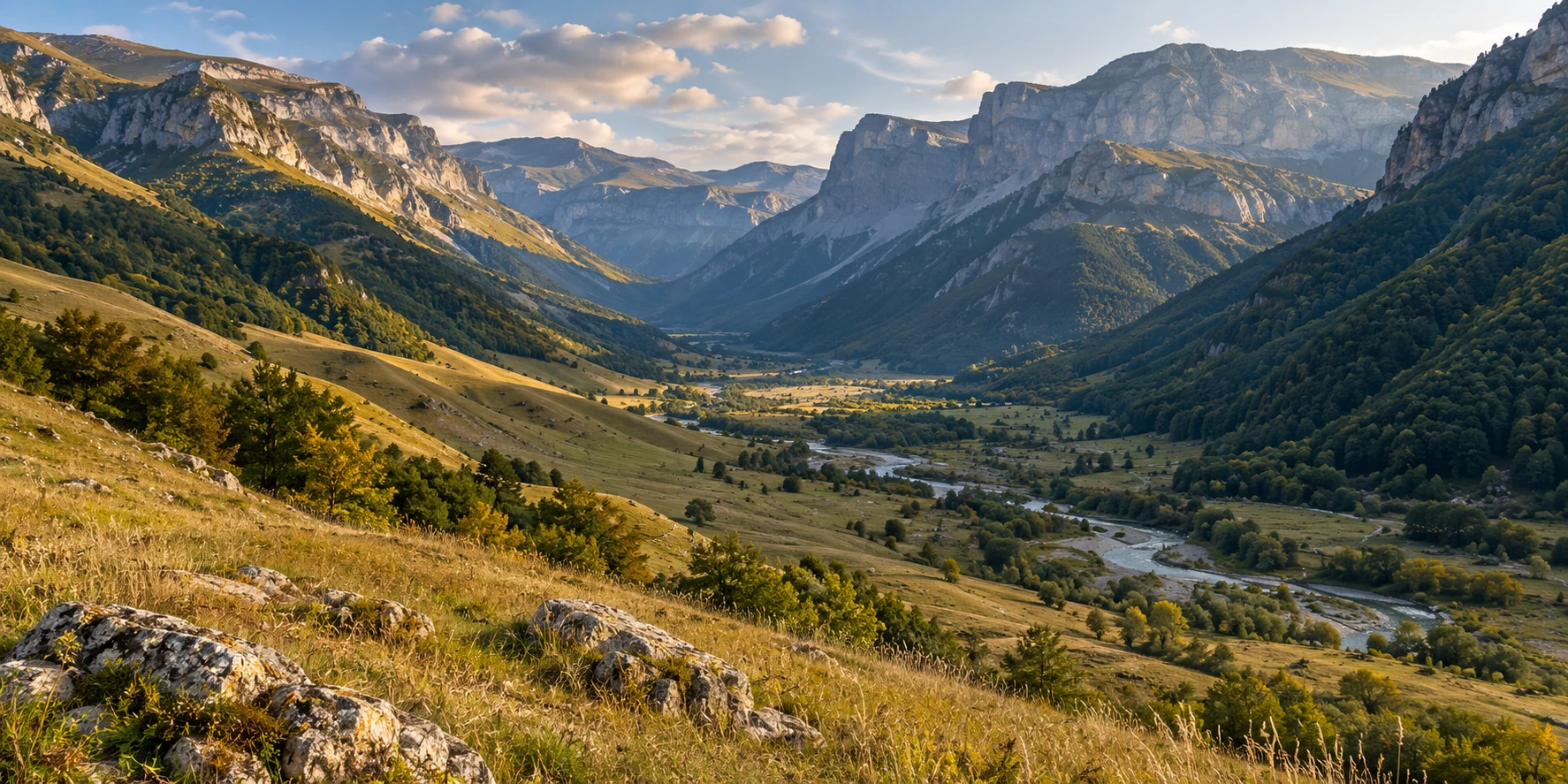
The illustrations were created for the portal and are not documentary photographs.