Chapter 1 · Antiquity
The Koban culture and archaeological heritage
A brief historical overview. Dates and interpretations have been checked against scholarly and primary materials; modern borders have not been projected onto ancient states.

Caucasus HeritageRemember your own. Know your neighbor. Preserve what is shared.
North Ossetia-Alania unites the plains and mountain valleys of the northern slope of the Greater Caucasus. Vladikavkaz, Digoria and Dargavs represent different sides of its history: urban life, natural landscapes, Alan heritage and the culture of mountain societies. The Ossetian language belongs to the Iranian branch of the Indo-European family.

678.8 thousand
residents as of 1 January 2025, a rounded Rosstat estimate in the profile of the Bank of Russia
8 thousand
square kilometres, the rounded area of the territory
2
state languages: Ossetian and Russian
Geography in Detail
North Ossetia-Alania has eight administrative districts. Vladikavkaz forms a separate urban okrug. The towns of Alagir, Ardon, Beslan, Digora and Mozdok are associated with the corresponding districts.
List of populated places as of 8 September 2026. Populated places with the same name in different municipal formations are shown separately. Small populated places without permanent population are also included; population figures are not given here.
Chapter 1 · Antiquity
A brief historical overview. Dates and interpretations have been checked against scholarly and primary materials; modern borders have not been projected onto ancient states.
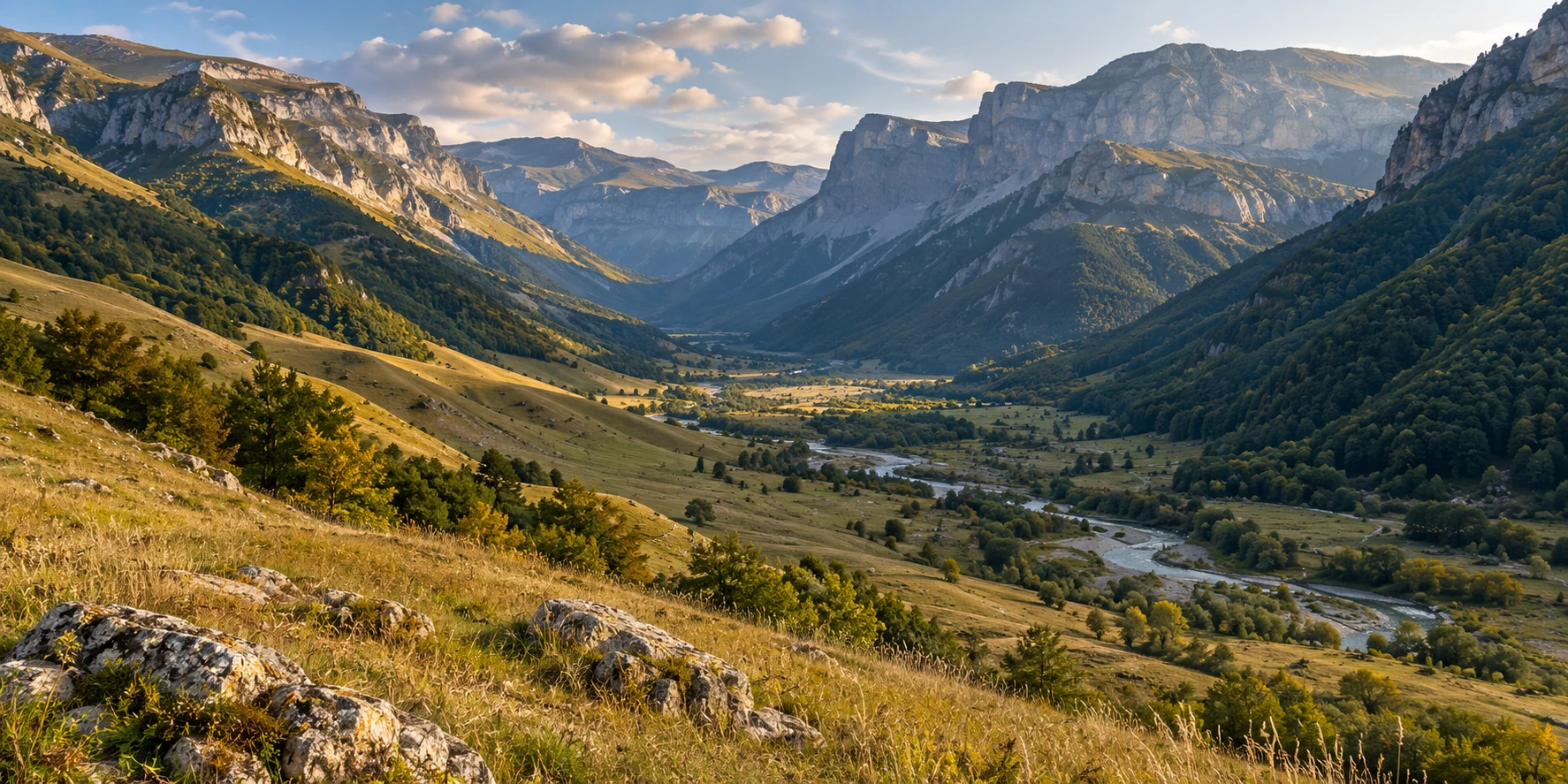
A landscape inspired by mountainous Digoria and the upper reaches of the Urukh. This is an artistic interpretation, and · an illustration. Authentic images of monuments are available in the museum materials below.
Russian · Russian version
The anthem was adopted by decree of the Supreme Council on 24 November 1994. Information about the state symbol has been published on the official portal of the republic.
Events: 13 / 13