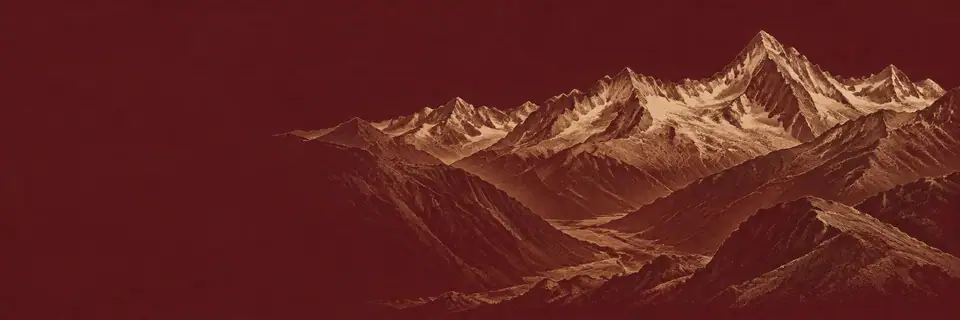
Mountain valley with a rocky riverbed, meadow slopes and high ridges
← All peoples

North Caucasus · North Ossetia–Alania

Ossetians

Iron · Digoron

Ossetians: Alan heritage, Iron and Digor traditions, language, culture and the life of mountain societies. History of beliefs, the spread of Christianity and Islam, a detailed chronology with materials.
Mountainous Digoria: landscape inspired by the upper Urukh · illustration

Language

Ossetian: Iron and Digor

Family

Indo-European family, Eastern Iranian group

Population

485,646 in Russia (2021 census)

History

A people of the Central Caucasus. Ossetians live on both sides of the Main Caucasus Range, in other regions of Russia and in communities abroad. Their history includes an Iranian linguistic heritage, an Alanian past and centuries of interaction with neighbors in the Caucasus. Ethnicity does not automatically coincide with citizenship or place of residence.
Alanian heritage. The Ossetian language continues the Alanian linguistic tradition. At the same time, medieval Alania was not an exact copy of the modern people or state: its population, political borders and cultural ties changed. The origin of individual archaeological complexes remains a subject of research.
Early Alans. Archaeological materials of the 3rd and 5th centuries show the formation of Alanian culture in the Central Ciscaucasia and its ties with the Sarmatian world. A burial ground, a type of ornament or a funerary rite is not in itself a passport of the ethnicity of each buried person.
Medieval ties. Alania interacted with Byzantium, the Kingdom of Abkhazia, Georgia and its steppe neighbors. Christian missions, diplomacy and the construction of churches became important components of its history. The letters of Patriarch Nicholas Mystikos are one of the written sources about these contacts.
The invasions of the 13th and 14th centuries. The Mongol campaigns and subsequent wars, including Timur's campaign of 1395, destroyed Alanian political centers and changed settlement patterns. Part of the population moved to the mountain regions; other groups ended up far beyond the Caucasus, including in the service of the Yuan Empire.
Societies of the mountain gorges. The Alagir, Kurtat, Tagaur and Digor societies united settlements with their own political and social relations. Kinship associations and rural communities constituted different levels of organization. A conventional notion of a single unchanging "tribal system" is insufficient here.
Relations with the Russian Empire. The negotiations and petitions of Ossetian representatives in the 18th century were connected with security, trade and resettlement. The year 1774 is an accepted historical milestone of these relations, but the incorporation of different societies into the administrative system was a lengthy process.
The 19th century. Resettlement from the mountains to the plain, new roads and administrative institutions changed the economy and everyday life. School education and written culture developed. The mountain settlement, the city of Vladikavkaz and the communities south of the range had different living conditions.
The 20th century and the memory of losses. Soviet autonomies and social transformations changed the political structure and culture. The 1992 conflict in the Prigorodny District was accompanied by the deaths of civilians, violence and forced displacement of the population, especially the Ingush. The history of the conflict must not be turned into an accusation of an entire people.
Population and language. In Russia, the census conducted in 2021 under the official name VPN-2020 counted 485,646 Ossetians. This is a Russian census total, not a world population figure, nor the number of believers or speakers of the language.

Ironians, Digorians and local societies

Ironian and Digorian traditions. The Ironians and Digorians constitute the two main linguistic and cultural groups. Digorian has its own literary standard. Differences in speech and local culture do not mean that members of a group profess one mandatory religion. Gorge identities. Alagirians, Kurtatinians, Tagaurians, Tualians and other local names are connected with settlement patterns and the history of societies. They cannot be arranged in a single row without explanation: dialect, gorge society and clan association denote different things. Kinship and surname. The myggag, the family branch and the surname brotherhood reflect different levels of kinship ties. A legend about a common ancestor is material of family memory, but for historical genealogy it requires comparison with documents.

Language

Ossetian belongs to the Eastern Iranian languages of the Indo-European family. Its Iranian basis is preserved despite numerous contacts with Caucasian languages. Being located in the Caucasus does not make it genealogically a Nakh, Adyghe or Kartvelian language.
The two main dialects, Iron and Digor, differ in sound, vocabulary and grammar. Literary Ossetian developed on an Iron basis; Digor has its own literary standard. Most scholars classify Kudaro-Java speech as Iron, although other classifications also exist.
The written tradition took shape through church translations, grammars and textbooks. In 1798 an Ossetian catechism was printed. In 1844 A. M. Sjögren's grammar with a short dictionary was published, becoming an important milestone in the scholarly description of the language.
In the 20th century various graphic bases were used. The modern Ossetian alphabet in North Ossetia is based on Cyrillic and includes the letter æ. Ossetian texts in South Ossetia were printed in Georgian script in 1938–1954.
V. I. Abaev's historical-etymological dictionary makes it possible to trace the history of words and linguistic contacts. The digital edition of the Institute of Linguistics provides access to dictionary materials; the etymology of an individual word is not equivalent to proof of the origin of an entire people.

Faith and history of religions

Ancient layers of belief. Traditional culture combines Iranian heritage and Caucasus connections. Agriculture, animal husbandry, kinship memory and ideas about sacred space shaped various rites. Later records do not allow the reconstruction of a single unchanging religion of all the ancient Alans. Khuitsau and revered patrons. In the prayer tradition, Khuitsau, Uastyrdzhi, Uatsilla, Falvara and other sacred figures are significant. Their functions and interpretations differ. The historical connection of the name Uastyrdzhi with Saint George is important, but it does not exhaust all folk ideas about him. The arrival of Christianity. The establishment of Christian institutions in Alania is connected with the Byzantine mission and the support of the neighboring Kingdom of Abkhazia at the beginning of the 10th century. The dating of individual letters and events is debated: 916–917 and 922 appear in scholarship. A single year is not the date of the instantaneous conversion of the entire population. Churches and the uneven depth of conversion. Church construction and a bishop's see testify to a firm presence of Christianity. Written evidence at the same time records the preservation of local customs. The baptism of a ruler, the existence of a diocese and the everyday faith of the rural population are different questions. After the collapse of medieval Alania. Military upheavals weakened former institutions, but Christian names, holidays and ritual elements did not disappear. They continued to live alongside local cults. Later ties with the Georgian church milieu and new missions influenced this tradition. The missions of the 18th and 19th centuries. The Ossetian Spiritual Commission, the activity of priests, translations and schools contributed to the spread of Orthodox practice and written education. Missionary work developed under conditions of growing Russian presence, so its religious, educational and political sides are connected. How Islam spread. From the 17th and 18th centuries, ties with neighboring Kabarda, including relations among the nobility and kinship contacts, became a significant channel. In the 19th century, Islamic practice strengthened in part of the communities. The process did not encompass all Ossetians and did not strictly coincide with the boundaries of a single dialect. Muslim communities. Ossetian Muslims belong predominantly to the Sunni tradition. Historically Islam is especially visible in part of Digoria and among a number of other Ossetian societies. The formula "all Digorians are Muslims, all Ironians are Christians" incorrectly describes the actual diversity. Kuyvd, dzuars and sacred places. The prayer meal kuyvd, the veneration of dzuars and common holidays unite religious practice with public life. A sanctuary may have a village, gorge or broader significance. Its modern building is not necessarily preserved unchanged since the Middle Ages. The Soviet period. Anti-religious policy restricted the public activity of religious institutions. Family and community rites were nevertheless preserved and reinterpreted. The development of secular culture did not mean an identical rejection of faith in all families. Contemporary diversity. Ossetians may identify themselves as Orthodox, Muslims, followers of the traditional faith or secular people. Some combine church affiliation with traditional rites. The names and boundaries of the traditional faith are a subject of internal discussion and scholarly study. How to read religious history. The terms "paganism", "monotheism", "syncretism" and "folk religion" reflect different scholarly and confessional approaches. None of them is imposed here as the obligatory self-identification of all Ossetians. A local survey does not replace statistics for the whole people.

Verified information

Language

  • Ossetian is an Eastern Iranian language of the Indo-European family.
  • Iron and Digor differ; Digor has a literary standard.

Settlement and population

  • In Russia, the 2021 census counted 485,646 Ossetians.

Culture and daily life

  • Kosta Khetagurov's collection "Iron fændyr" first appeared in 1899.
  • The costume is documented through object collections and field expeditions.

History

  • The dating of individual events of the Christianization of Alania in the early 10th century is debated by scholars.
  • The Rekom building was reconstructed after the 1995 fire.

Detailed chronology

  1. 3rd–5th centuries

    The Alan culture of the Central Ciscaucasia
    Funerary monuments are studied together with anthropological and linguistic data.
  2. Early Middle Ages

    The development of North Caucasian Alania
    Political ties and the cultural environment changed; the medieval population cannot be described by a single modern ethnic scheme.
  3. Early 10th century

    The Christian mission and the Alan see
    The letters of Nicholas Mystikos show the involvement of Byzantium and Abkhazian rulers.
  4. 916–917 or around 922

    The debated dating of Christianization
    The dates depend on the reconstruction of written materials. They do not mean the simultaneous conversion of all Alans.
  5. 10th–13th centuries

    Church building and religious ties
    Christian institutions interacted with local ritual culture.
  6. 1238–1239

    The Mongol conquest of Alania
    The destruction of political centres was accompanied by loss of population and displacements.
  7. 13th–14th centuries

    Alans in the service of the Yuan Empire
    Some people of Alan origin ended up in China; their history is illuminated by Eastern chronicles.
  8. 1395

    Timur's campaign
    A new military catastrophe changed the settlement and position of the surviving communities.
  9. The late Middle Ages

    Societies of the mountain gorges
    Gorge associations and rural communities developed under new conditions.
  10. 17th–18th centuries

    The spread of Islam through Kabarda
    Neighbourly and kinship ties contributed to the emergence of Muslim communities.
  11. 1740s

    The Ossetian Spiritual Commission
    Missionary activity was accompanied by the collection of information and the development of Russian-Ossetian contacts.
  12. 1774

    Negotiations of Ossetian representatives with the Russian authorities
    The Mozdok agreements became an important milestone; the administrative incorporation of the societies remained a lengthy process.
  13. 1784

    Foundation of the Vladikavkaz fortress
    The new center on the routes across the Caucasus later became the largest city of North Ossetia.
  14. 1798

    The first printed Ossetian book
    The catechism became an early monument of Ossetian printed text.
  15. First half of the 19th century

    Missionary schools and translations
    Church education took part in the development of literacy and written culture.
  16. 1844

    A. M. Sjögren's grammar
    A scholarly description of the language with a short dictionary was published in Saint Petersburg.
  17. 19th century

    Migration from the mountains and changes in the economy
    Settlement of the plain and new administrative relations transformed everyday life.
  18. 1881–1887

    Vsevolod Miller's "Ossetian Studies"
    Field records, language and beliefs became the subject of systematic scholarly research.
  19. 1883

    Historical portrait in traditional clothing
    This date in the Wikimedia Commons description marks the photograph of the girl Zhukayeva. The author has not been identified.
  20. 1899

    First edition of "Iron fændyr"
    Kosta Khetagurov's collection became an important milestone of Ossetian literature.
  21. 1906–1907

    Collecting work by Z. P. Valayev
    Items of clothing, utensils and craftwork entered the ethnographic museum collection.
  22. 1922

    Formation of the South Ossetian Autonomous Oblast
    The Soviet administrative arrangement south of the range took place within the Georgian SSR.
  23. 1924

    Formation of the North Ossetian Autonomous Oblast
    The North Ossetian autonomy came into being; its status later changed.
  24. 1920s and 1930s

    Transitions between writing systems
    Education and publishing activity were accompanied by writing reforms.
  25. 1936

    North Ossetian ASSR
    The autonomous oblast was transformed into an autonomous republic.
  26. 1938–1954

    Georgian script in South Ossetia
    The Georgian alphabet was used in the south; later the Cyrillic basis was restored.
  27. 1939

    Creation of the art museum
    The Republican Picture Gallery in Vladikavkaz laid the foundation for the modern museum.
  28. 1941–1945

    The Great Patriotic War
    Wartime experience, losses and labor on the home front entered family and public memory.
  29. 1958–1989

    Vasily Abayev's dictionary
    The main volumes of the historical-etymological dictionary of the Ossetian language were published.
  30. 1970

    E. N. Studenetskaya's ethnographic expedition
    Clothing, museum objects and field data were documented.
  31. 1971

    The museum was named after Makharbek Tuganov
    The name cemented the institution's connection with the history of Ossetian art.
  32. Late 1980s and 1990s

    New religious and cultural initiatives
    Traditional faith and public rites became the subject of open discussions.
  33. 1992

    Ossetian-Ingush conflict
    Violence in the Prigorodny District led to civilian casualties and mass forced displacement.
  34. 12 November 1994

    Constitution of North Ossetia
    The fundamental law of the republic was adopted. This date is not the beginning of Ossetian history.
  35. 1995

    Fire and the subsequent reconstruction of Rekom
    The modern history of the sanctuary includes the loss of the wooden building and restoration work.
  36. 1–3 September 2004

    The Beslan tragedy
    The seizure of School No. 1 by terrorists and the deaths of the hostages became a severe trauma of public memory.
  37. August 2008

    War and population displacement
    The hostilities and subsequent violence in South Ossetia and neighboring districts affected civilians of various nationalities.
  38. 2012

    The academic monograph "The Ossetians"
    The volume in the "Peoples and Cultures" series summarized research on history, daily life and culture.
  39. 2021

    All-Russian Population Census
    In Russia, 485,646 Ossetians were counted; the results were published as part of the 2020 All-Russian Population Census.
  40. 2022

    Studies of Christianity in the North Caucasus
    The SOIGSI collection examines history, written testimonies and contemporary religious life.

Cuisine

  • Ossetian pies

    The pies are made with cheese, meat, herbs and other fillings. Home, festive and memorial food have different rules of serving; the modern restaurant assortment is not identical to the historical ritual table.
  • Three pies and the rite

    In a number of toasts for health, three pies are served; the memorial meal differs in composition and symbolism. Popular explanations of their meaning should not be presented as the only unchanging interpretation.
  • Dairy farming and seasonality

    Cheese, fermented milk products, grain and meat foods are connected with mountain animal husbandry and agriculture. The proportion of products depended on altitude, prosperity and season.
  • Beer in the ritual meal

    Traditional beer figures in descriptions of prayer meals. Its ritual role does not mean identical consumption by all Ossetians, especially in communities with different religious norms.

Adats and traditions

  • Æghdau and ethics

    Æghdau links norms of behaviour, deference and public order. In scholarly descriptions, Ironginad expresses the Ossetian ethical ideal; it should not be regarded as a set of innate qualities possessed by every person.
  • Elders and juniors

    Age etiquette regulates greeting, speech and behavior at the table. Historical prescriptions are studied in the context of their time; the modern family is not obliged to reproduce all former restrictions.
  • Kinship associations

    A myggag unites several family branches connected by the memory of a common origin. Such associations should be distinguished from the rural community and the linguistic dialect. Modern family gatherings are one form of preserving this memory.
  • Hospitality and mutual aid

    The reception of a guest and support for relatives and neighbors occupy an important place in the ethnography of communication. Their concrete forms change together with the organization of settlements and the family.

Clothing

The men's ensemble included a shirt, trousers, beshmet, cherkeska, headwear and footwear. The burka and bashlyk protected against bad weather. Common Caucasus elements combined with local features; one cherkeska alone cannot determine the ethnicity of the person depicted.
Women's clothing, headdresses, belts and jewellery varied by period, place and wealth. E. N. Studenetskaya's 1970 expedition compared actual objects from museums and private collections with field notes. This approach is more reliable than a generalized "national costume" without dating.
Below is a historical portrait described in Wikimedia Commons as an Ossetian girl, Zhukaeva, in traditional dress, 1883. The photographer is not identified; the description names Kunstkamera as the source material. The photograph shows a specific costume and does not represent the full diversity of Ossetian clothing.

Traditional costume

Dances

  • Simd

    The mass dance exists in various forms and variants of accompaniment. Archival recordings allow local performances to be compared rather than reduced to a single stage composition.
  • Dance and celebration

    Dance communication was part of festive and wedding culture. Its rules, the composition of participants and the movements depended on the specific situation.
  • Folklore and the stage

    Professional staging reworks traditional material for an audience. Its costume, pattern and duration are not an exact record of any old village dance.

Music

The term fændyr is part of the names of various instruments. The kh'isyn-fandyr is a bowed instrument, the dala-fandyr is associated with the plucked tradition; the Ossetian harp represents a different type of construction. They cannot be described as the same instrument.
Nart tales, historical and lyric songs combine music, word and collective memory. The tale of the origin of the fandyr is an epic subject, not a documentary description of the invention of the instrument.
Kosta Khetagurov called his poetry collection "Iron fændyr", the "Ossetian lyre". This is a literary image connected with national culture; the poetry collection should not be confused with a catalogue of musical instruments.

Crafts

  • Working with wool and cloth

    Museum collections include wool-processing tools, samples of cloth and clothing. They document domestic technologies of the late 19th and early 20th centuries.
  • Embroidery, galloons and cords

    Samples of women's handiwork show the technique of finishing and making clothing ornaments. It is important to distinguish an item in everyday use from a sample made specifically to demonstrate craftsmanship.
  • Stone construction

    Towers, dwellings and crypts are connected with the layout of mountain settlements and family memory. Dating and purpose require the study of each complex; a picturesque appearance does not prove its age.

Memorable Places

  • Dargavs necropolis

    The complex of above-ground and semi-underground crypts is a monument of funerary architecture. It cannot be explained by a single unconfirmed story about an epidemic.
  • Rekom in the Tsey Gorge

    A significant sanctuary and place of communal religious life. After the fire of 1995 the wooden building was recreated; its present appearance is not an untouched ancient structure.
  • National Museum of North Ossetia

    Museum collections help to study history, archaeology and ethnography through objects with established provenance.
  • Makharbek Tuganov Art Museum

    Vladikavkaz holds a collection of fine art that is important for the history of Ossetian artistic culture.
  • The memorial heritage of Kosta Khetagurov

    Museum objects and early editions preserve the history of the writer's work and the appearance of the "Ossetian lyre".

Names

Men's

  • Alan (Ossetian)
  • Akhsar (Ossetian)
  • Akhsartag (Ossetian, Nart)
  • Soslan (Ossetian, Nart)
  • Batraz (Ossetian, Nart)
  • Uruzmag (Ossetian, Nart)
  • Khamits (Ossetian, Nart)
  • Atsamaz (Ossetian, Nart)

Women's

  • Agunda (Ossetian, Nart)
  • Dzerassa (Ossetian, Nart)
  • Atsyrukhs (Ossetian, Nart)
  • Zarina (Ossetian, Iranian)
  • Alana (Ossetian)
  • Zardirukh (Ossetian)

People and cultural memory

  • Kosta Khetagurov

    Poet, artist and publicist, one of the central figures of Ossetian culture. "Iron fændyr" was first published in 1899 and played a major role in the development of literature.
  • Vasily Abaev

    Linguist and researcher of Iranian languages. His historical-etymological dictionary of the Ossetian language became a foundational work on the history of vocabulary and linguistic contacts.
  • Nart heroes

    Soslan, Batradz, Uryzmæg, Satana and other characters belong to the epic. Their cultural significance does not require presenting their biographies as documentary history of real people.

Media

Photo gallery

The illustrations were created for the portal and are not documentary photographs.