
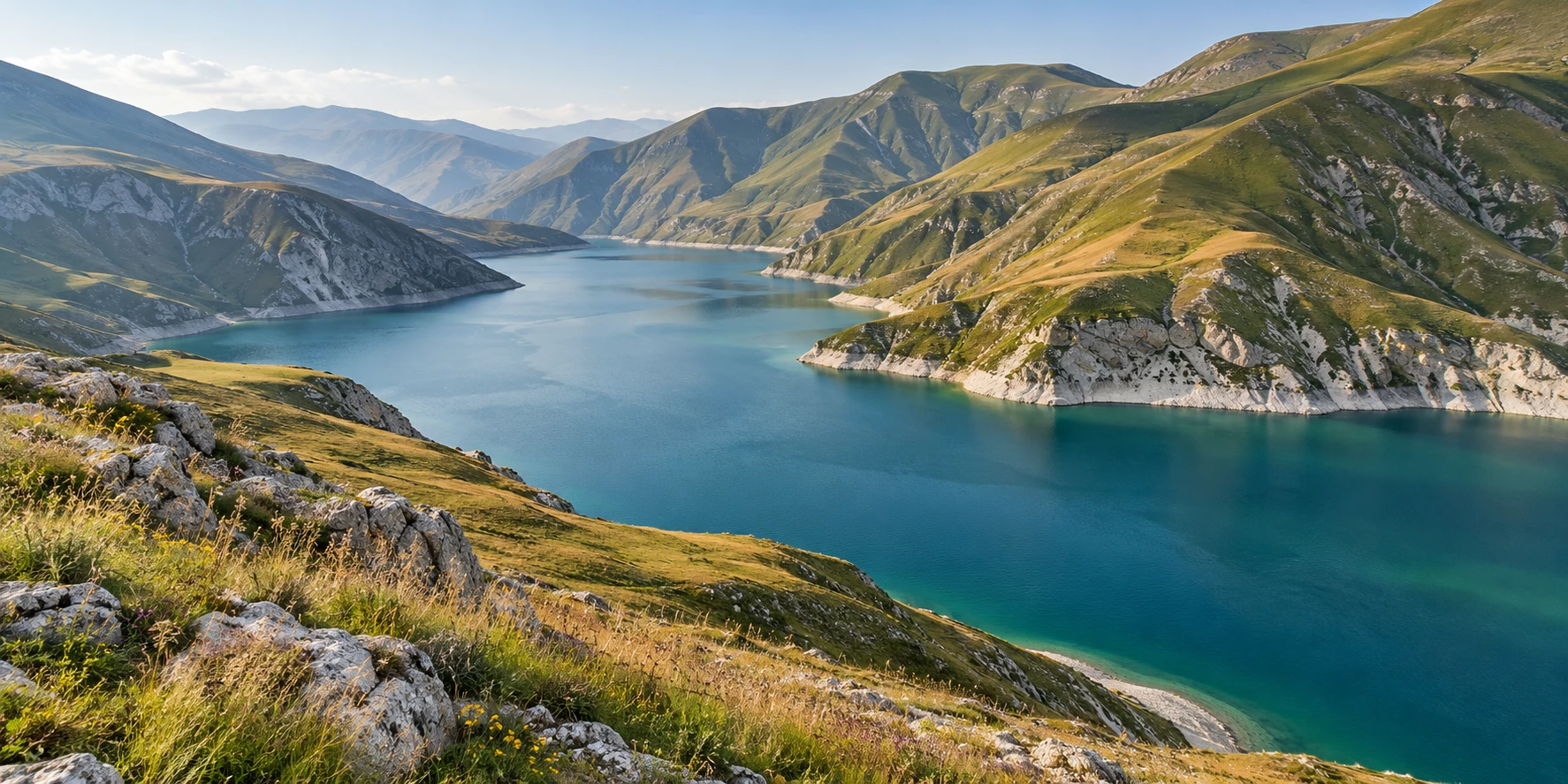
A high-mountain lake among grassy slopes with outcrops of light limestone
Landscape inspired by Lake Kezenoy-Am · illustration · Artistic illustration

1.58 million

residents as of 1 January 2025, rounded Rosstat estimate

16.2 thousand

square kilometres, the area of the republic

2

state languages: Chechen and Russian

Geography in Detail

Cities, villages and districts

Since 2026, the municipal structure of the Chechen Republic includes 15 municipal districts and two urban districts: Grozny and Argun. The cards separately list towns, villages, stanitsas and settlements. The Galanchozh and Cheberloy administrative districts are shown separately from the municipal districts.

Settlements
373
Territories
19

List of settlements as of 8 September 2026. Settlements with the same name in different municipalities are shown separately. Small settlements without permanent population are also included; population figures are not given here. The names of municipal districts are given according to the structure in force since 2026. Administrative districts and municipal districts are different.

Urban okrugGroznyCenter: Grozny
Urban okrugArgunCenter: Argun
Municipal DistrictAchkhoy-Martan Municipal DistrictCenter: Achkhoy-Martan
Municipal DistrictVedeno Municipal DistrictCenter: Vedeno village
Municipal DistrictGrozny Municipal DistrictCenter: Tolstoy-Yurt village
Municipal DistrictGudermes Municipal DistrictCenter: Gudermes
Municipal DistrictItum-Kali Municipal DistrictCenter: Itum-Kali village
Municipal DistrictKurchaloy Municipal DistrictCenter: Kurchaloy
Municipal DistrictNadterechny Municipal DistrictCenter: Znamenskoye village
Municipal DistrictNaursky Municipal DistrictCenter: Naurskaya
Municipal DistrictNozhay-Yurt Municipal DistrictCenter: Nozhay-Yurt village
Municipal DistrictSernovodsky Municipal DistrictCenter: Sernovodskoye
Municipal DistrictUrus-Martan Municipal DistrictCenter: Urus-Martan
Municipal DistrictShali Municipal DistrictCenter: Shali
Municipal DistrictSharoy Municipal DistrictCenter: Khimoy village
Municipal DistrictShatoy Municipal DistrictCenter: Shatoy village
Municipal DistrictShelkovskoy Municipal DistrictCenter: Shelkovskaya
Administrative DistrictGalanchozh District
Administrative DistrictCheberloy District

Geography and population

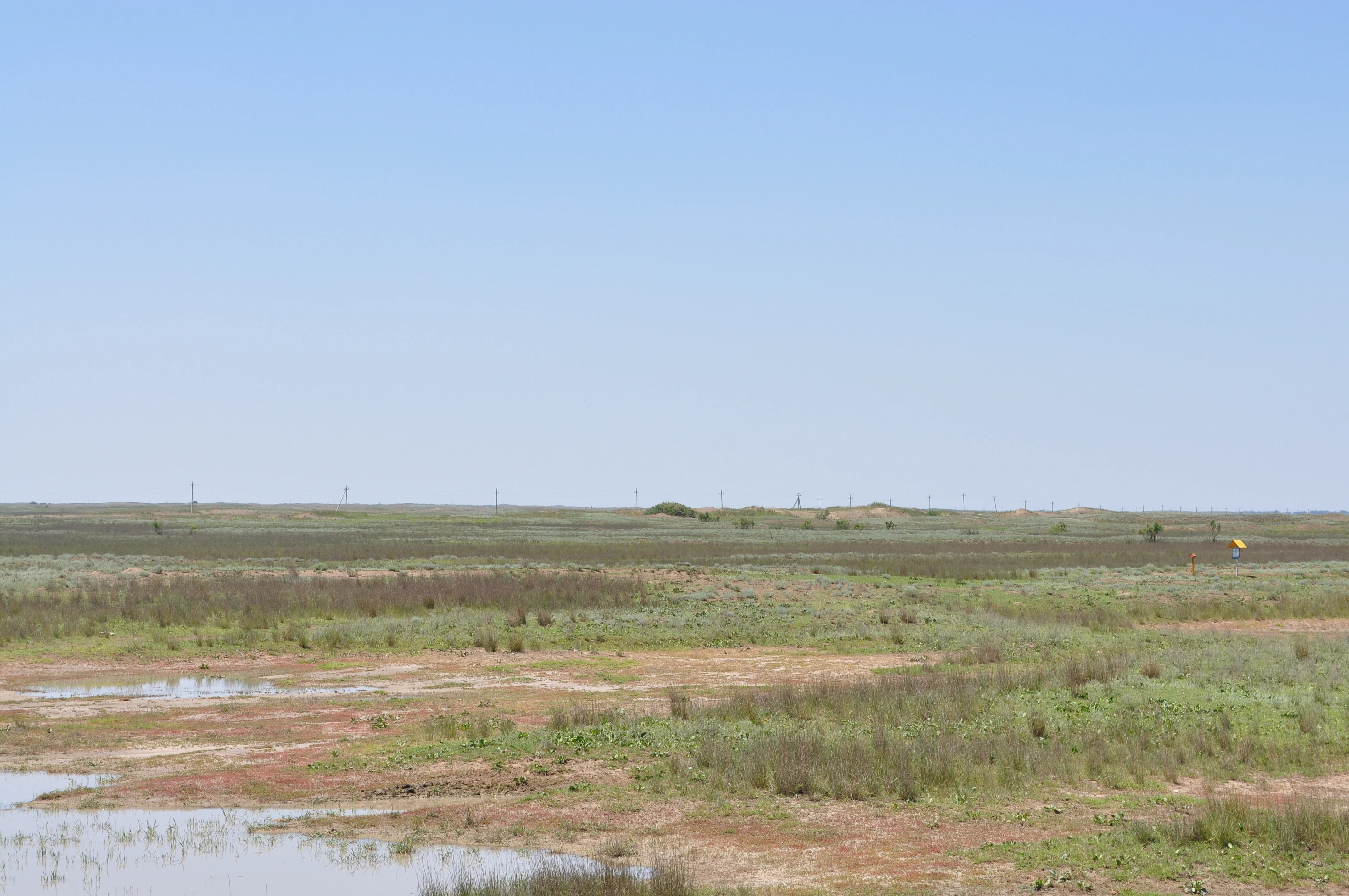
The Chechen Republic is located in the North Caucasus Federal District. Its territory includes plains and foothills, as well as mountain valleys on the northern slope of the Greater Caucasus. The area is 16.2 thousand km². The capital, Grozny, is situated on the Sunzha River. According to Rosstat data cited by the Bank of Russia, the population as of 1 January 2025 was 1,576.6 thousand people, or about 1.58 million. This is an estimate for a specific date; it differs in method from a population census. The republic's economy includes construction, trade, agriculture and industry. The historical fame of Grozny oil does not mean that the modern economy consists only of oil extraction.

Peoples of the region

Local communities and diaspora

Teips and local societies
Historical kinship ties and belonging to a village form part of the social memory of the Chechens. Their role has changed over time; the modern life of the republic cannot be described through a clan scheme alone.
Akkian tradition
The Akkian, or Aukhov, dialect is represented primarily in Dagestan. It is part of the broader Chechen linguistic space, which extends beyond the administrative borders of Chechnya.
Kistin tradition
The Kistin dialect is spoken in the Pankisi Gorge of Georgia. Kistin communities have their own experience of life in a Georgian cultural and linguistic environment.

Languages

Chechen

Nokhchiin mott belongs to the Nakh group of the Nakh-Dagestanian language family. Modern writing uses the Cyrillic alphabet. The literary norm developed on the basis of the lowland dialect; local dialects retain their own features.

Russian

Russian is a state language alongside Chechen. Article 10 of the republic's Constitution establishes this status for both languages.

Other languages

Kumyk, Nogai and other linguistic traditions exist in the republic. A person's family language and ethnicity are not determined by place of residence alone. The legal status of languages is regulated by the republican law "On Languages in the Chechen Republic".

Population and communities

The cards above lead to published articles about peoples. The total population of a people indicated in them refers to the geography of its settlement and is not equal to the number of residents of Chechnya. Historical changes in the composition of the population are studied through censuses, archives and migration research. .
Chechens
The main people of the republic; a separate article of the portal is devoted to the language, history and cultural traditions of the Chechens.
Russian and Cossack communities
Their history is connected with Grozny, industry and the settlements of the Terek plain. The wars and migrations of the late 20th century substantially changed the composition of the population.
Kumyks and Nogais
Historical communities of the northeast and north of the republic. The linguistic areas of these peoples also extend into neighboring regions.
Ingush and other residents
The shared history of the Chechen-Ingush autonomy links Chechnya and Ingushetia. The modern republic remains home to people of various origins.

History

Text size
Text size: 100%

Chapter 1 · Antiquity

Settlements and archaeological cultures

Archaeological sites on the territory of modern Chechnya reflect the long history of settlement in the Caucasus. In 2025, the Institute of Archaeology of the Russian Academy of Sciences investigated the Iskrinskoye 1 settlement: in a Bronze Age area, dwellings and a casting site with a furnace, molds and other traces of metalworking were discovered. The finds provide information about the crafts and daily life of ancient inhabitants.
The Serzhen-Yurt burial ground belongs to the eastern variant of the Koban culture. The published materials present, in particular, finds from the 10th-8th centuries BCE. An archaeological culture describes a set of sites and artifacts; it cannot be automatically equated with a modern people. ; .
Page 1 of 1in chapter 1

The historical outline is compiled from archaeological publications, archival documents and research. The deportation and the armed conflicts are treated in separate chapters; numerical estimates of losses for which there is no agreed data are not given.

Nature and monuments

The Argun Gorge combines natural landscapes and historical settlements. The tower complexes are connected with the life of mountain communities, roads and defence. The Ushkaloy towers stand by the bank of the Chanty-Argun beneath a rocky ledge; their location is among the most recognizable images of mountainous Chechnya. ; Museum of the Chechen Republic: the towers of the Argun Gorge. Lake Kezenoy-Am is located in the high mountains on the border of Chechnya and Dagestan. Its coastal slopes and mountain basin form a distinct natural landscape. The lake is connected with both regions, so presenting it as an exclusively Chechen or exclusively Dagestani site would be inaccurate. Monuments of mountain architecture differ in their time of construction, state of preservation and extent of restoration. Documentary photographs and scholarly descriptions make these differences visible.

Religious heritage

Sunni Islam occupies a significant place in the religious life of the Chechens. Sufi traditions and associations of followers of spiritual guides are important for the history of the region. In particular, the teaching of Kunta-Haji Kishiev is associated with the Qadiriyya brotherhood. The encyclopedic article by J. I. Meskhidze examines the biography of Kunta-Haji, the spread of his teaching and the historical circumstances of the 19th century. Religious history includes various currents and stages; the personal beliefs of a modern resident of the republic are not determined by a single ethnic characteristic.

Costume, crafts and music

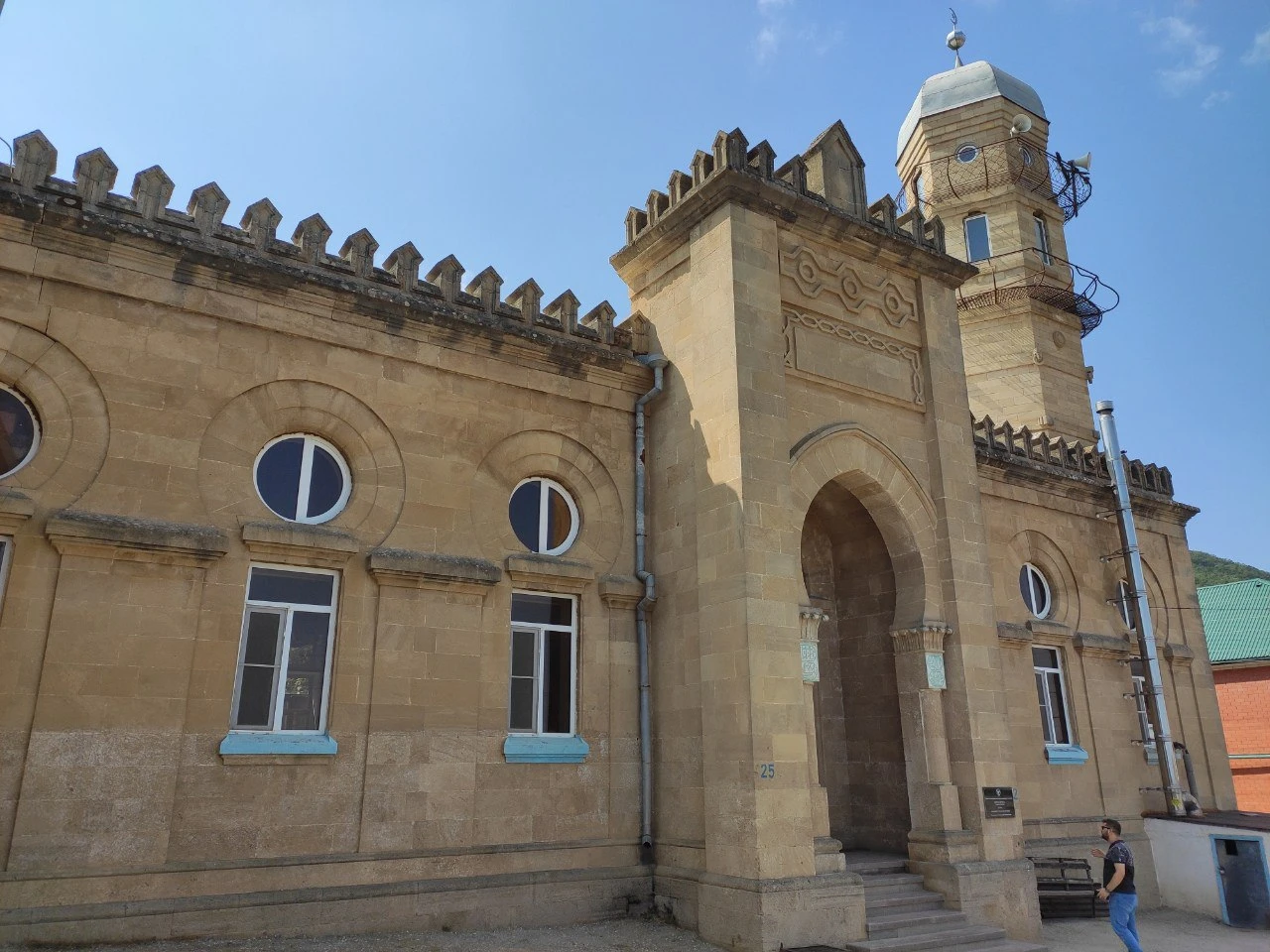
Museum materials preserve information about felt-making, clothing and everyday objects. The burka was a sleeveless felt cloak that protected against cold, rain and wind. Its making was a laborious craft and required preparing wool, felting and finishing. Chechen musical culture includes song traditions, instrumental music and religious singing. Museum research examines string, wind and percussion instruments. Field recordings make it possible to hear specific performers; their origin and the time of recording are important for understanding the material. ; . Historical costume and folklore are described with indication of place and time. In modern Chechnya, traditional heritage exists alongside urban culture, literature and professional art.

Cuisine and food culture

The traditional food system combines flour, meat, dairy and plant products. Among the well-known dishes are zhizhig-galnash, meat with dumplings and broth, as well as flatbreads with various fillings. The composition of a meal depended on the season, the family's means and the household. B. B.-A. Abdulvakhabova's study is devoted to the food of the Chechens in the 19th and early 20th centuries. It examines everyday and ritual meals, the rules of hospitality and the connections of food with the culture of neighbouring peoples. The historical description belongs to its period and does not mean that all modern families observe the same rules.

Media

Mountain landscape of Chechnya

The landscape is inspired by Lake Kezenoy-Am and is not a documentary photograph of a specific location. Authentic photographs of archaeological work and archival images are available via the links below.

Anthem

State Anthem of the Chechen Republic

Chechen

Lyrics: Kh.-A. Kadyrov. Music: U. Beksultanov. Law of the Chechen Republic of 28 July 2010 No. 30-RZ, as amended on 12 March 2023.

The approved text and musical version of the state anthem are published in the annexes to the law. The full version can be opened via the link “Official text”.

Timeline

Events: 11 / 11

10th–8th centuries BCE
Finds of the Koban culture from the Serzhen-Yurt burial ground, published in studies by the Institute of Archaeology of the Russian Academy of Sciences.
1785-1791
The movement of Sheikh Mansur in the North Caucasus.
1818
The founding of the Groznaya fortress on the Sunzha; the subsequent development of the city of Grozny.
30 November 1922
The formation of the Chechen Autonomous Oblast.
1934
The unification of the Chechen and Ingush autonomous oblasts.
1936
The transformation of the united autonomous oblast into the Chechen-Ingush ASSR.
23 February 1944
The beginning of the forced deportation of the Chechens and Ingush. In 1944 the autonomy was abolished.
9 January 1957
Decree on the restoration of the Chechen-Ingush ASSR; lifting of the ban on return.
1994-1996
The First Chechen War; the Khasavyurt agreements of August 1996.
1999
The beginning of a new war and the mass displacement of civilians.
23 March 2003
Adoption of the Constitution of the Chechen Republic.